
Last updated November 2, 2026
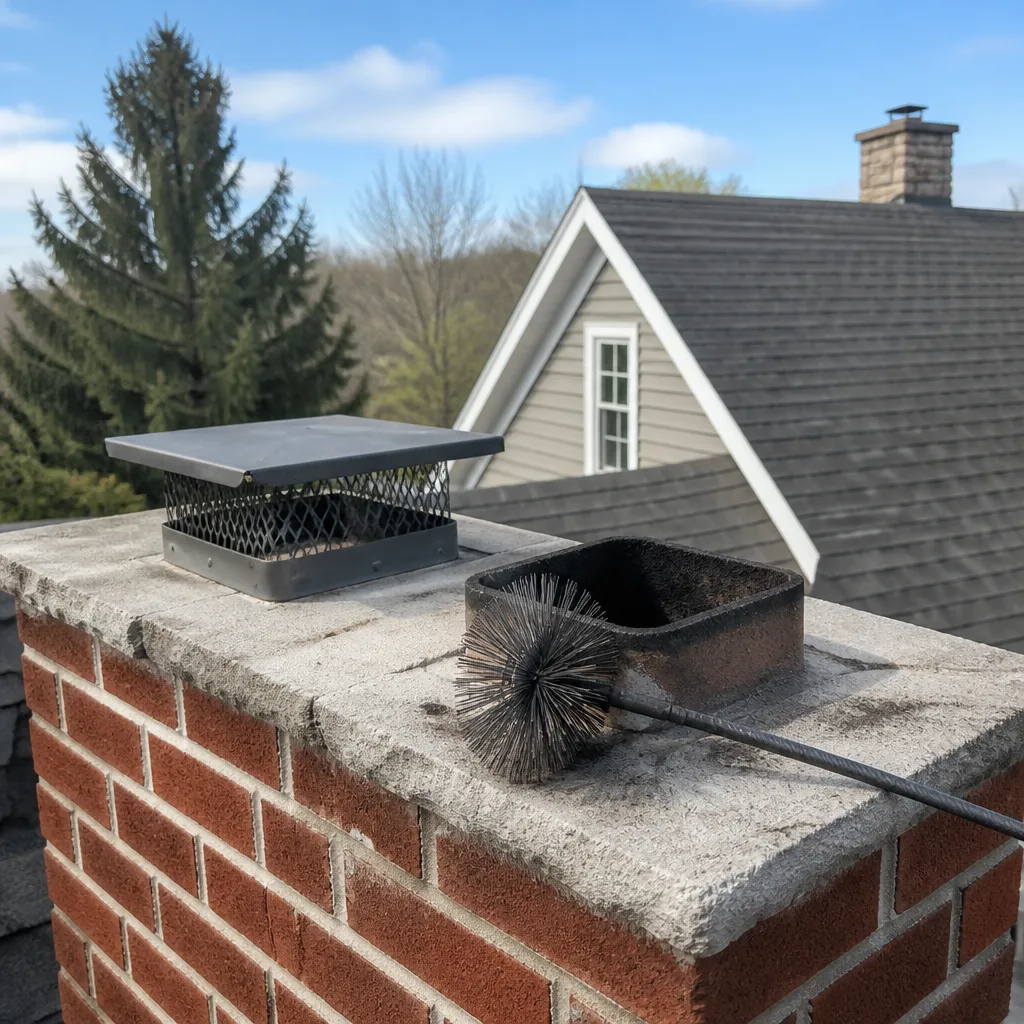 Sweep & inspection
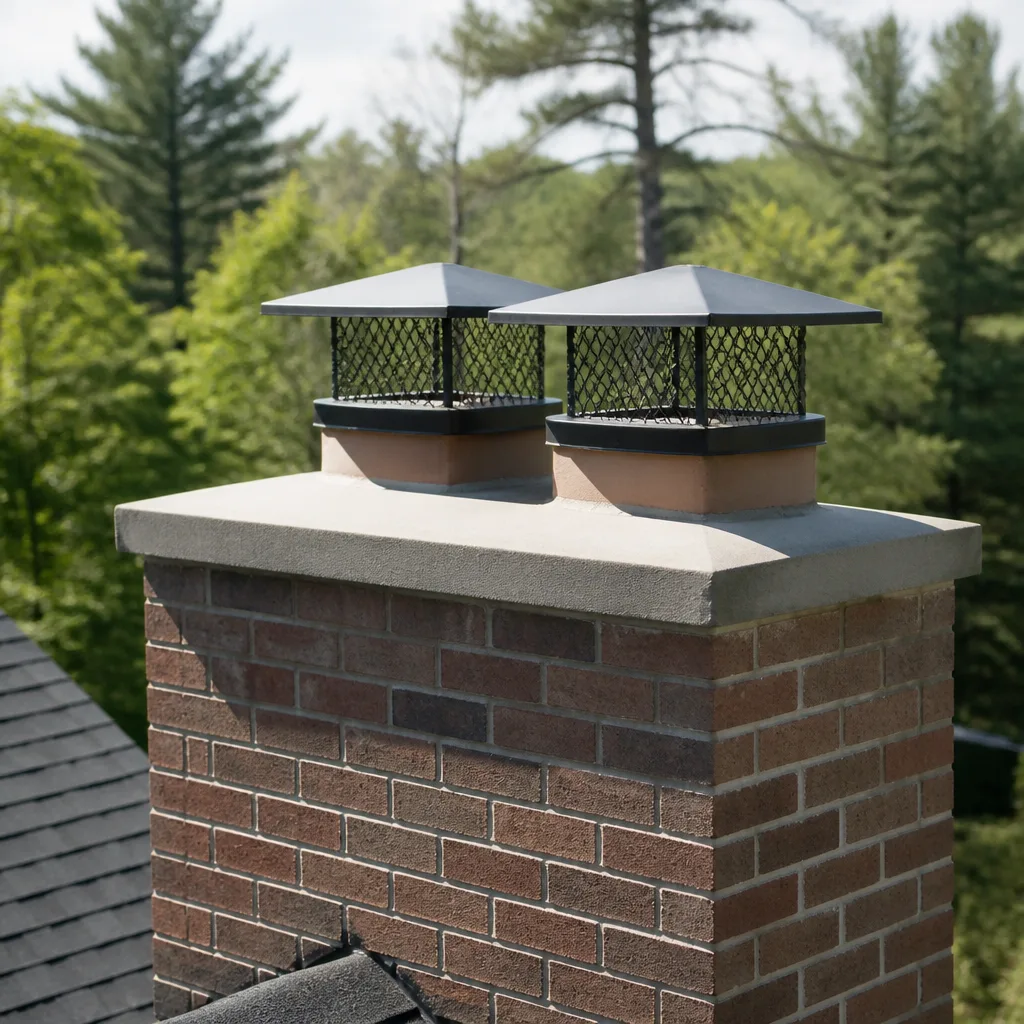 Caps & crowns
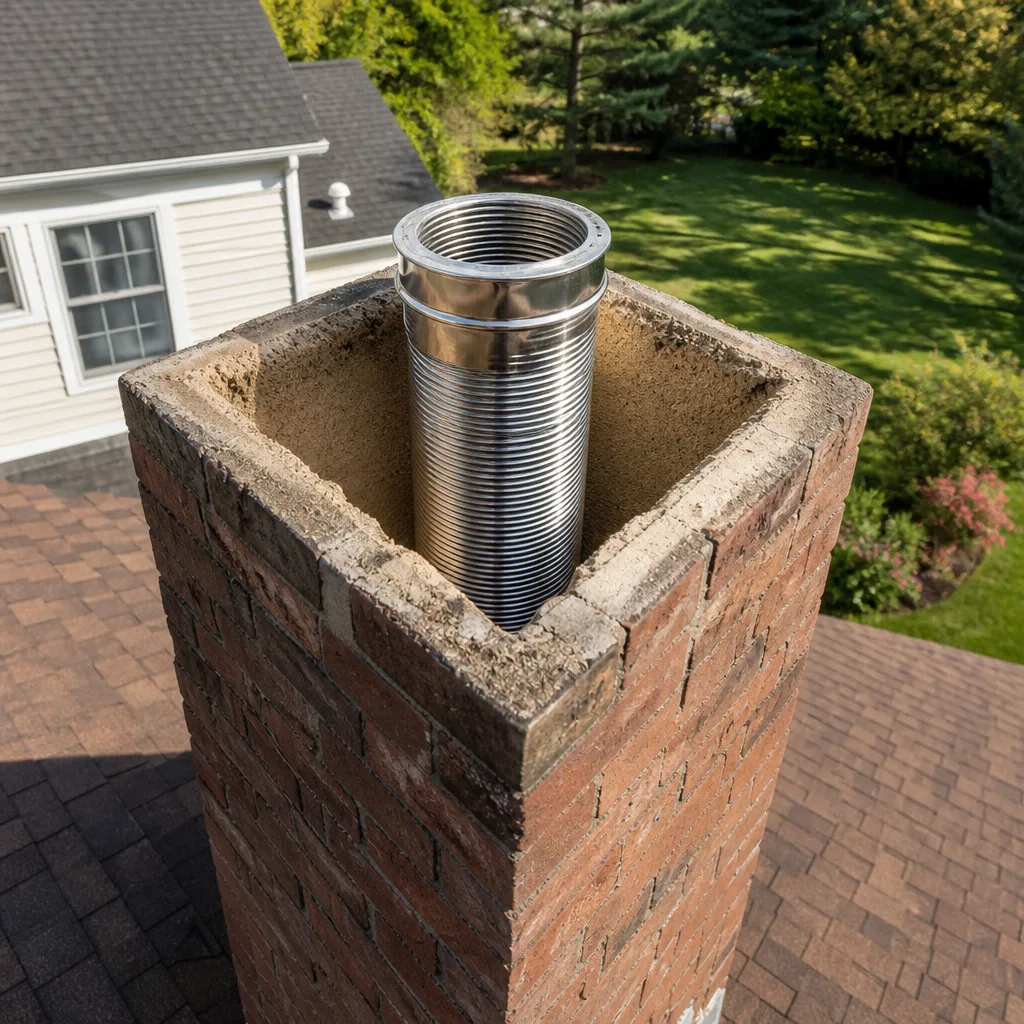 Flue relining
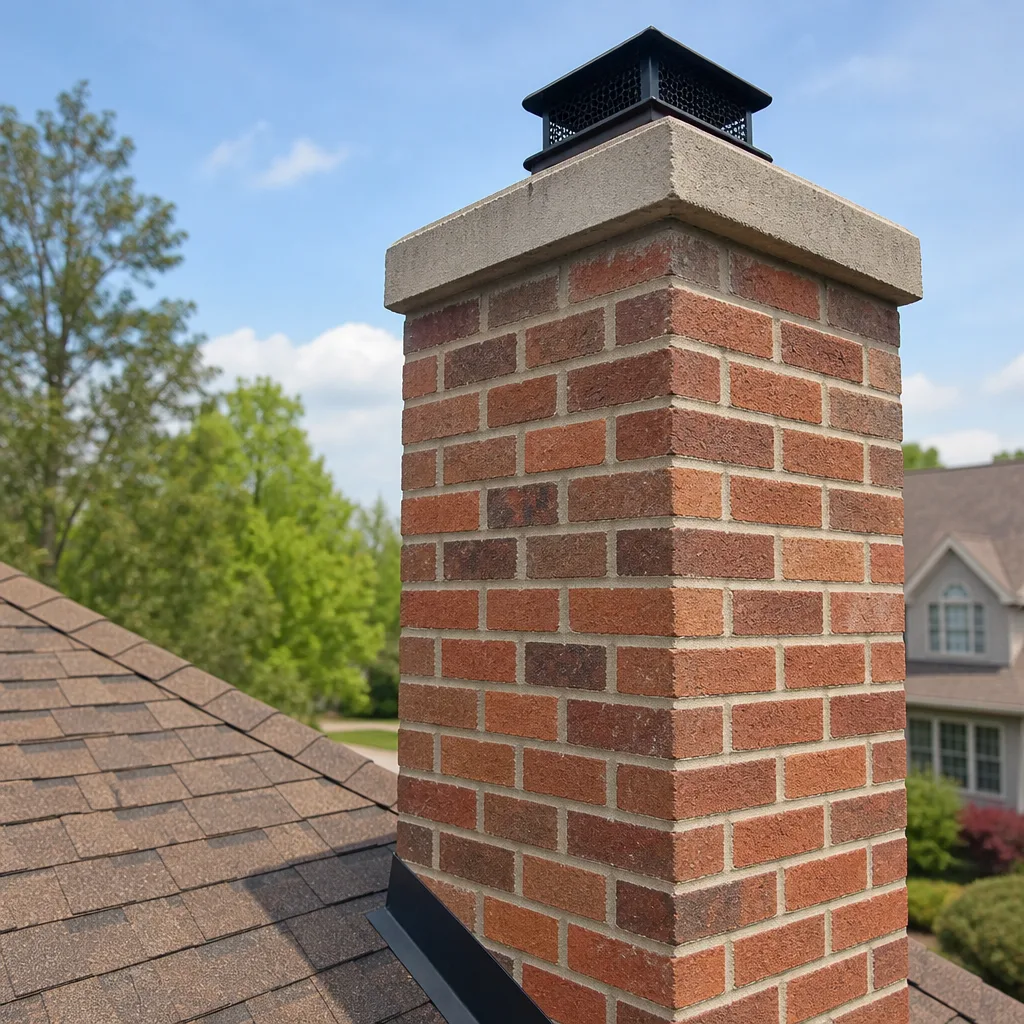 Masonry repair
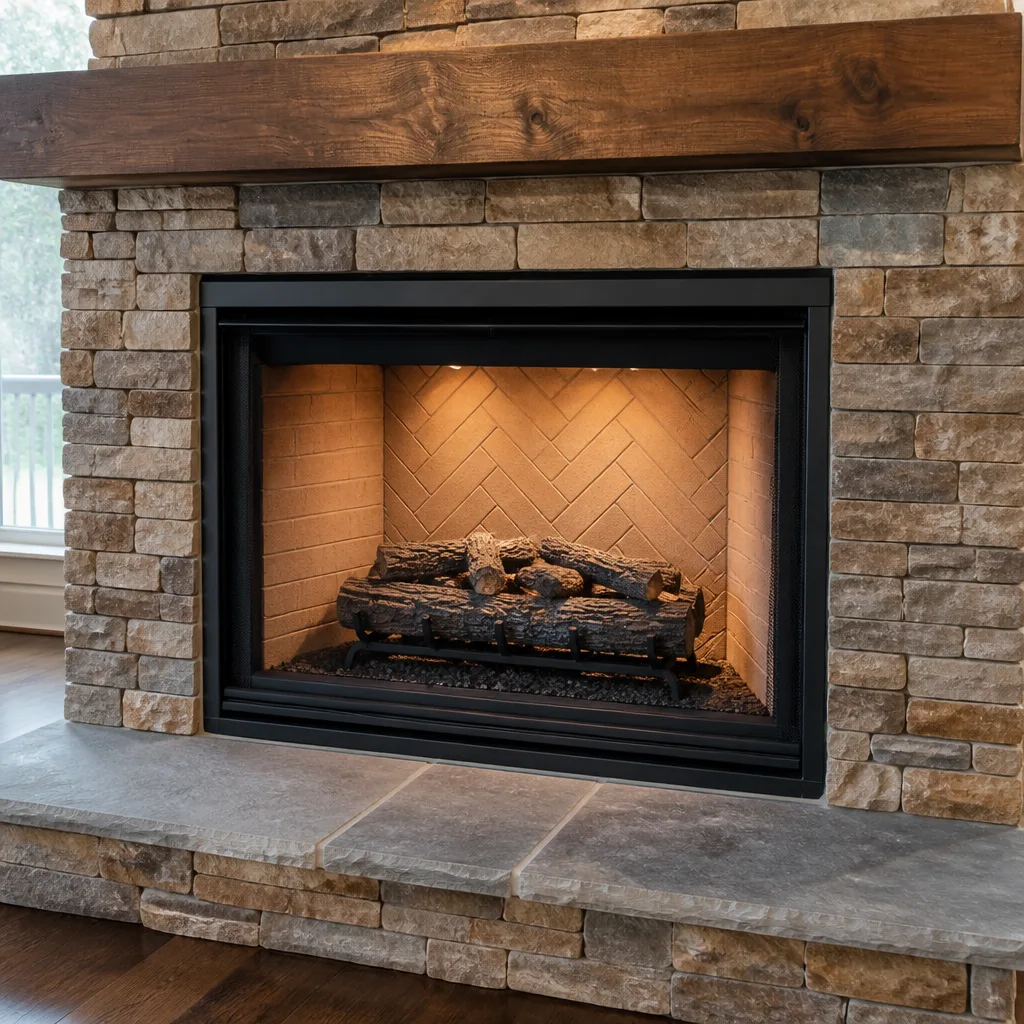 Gas fireplace service
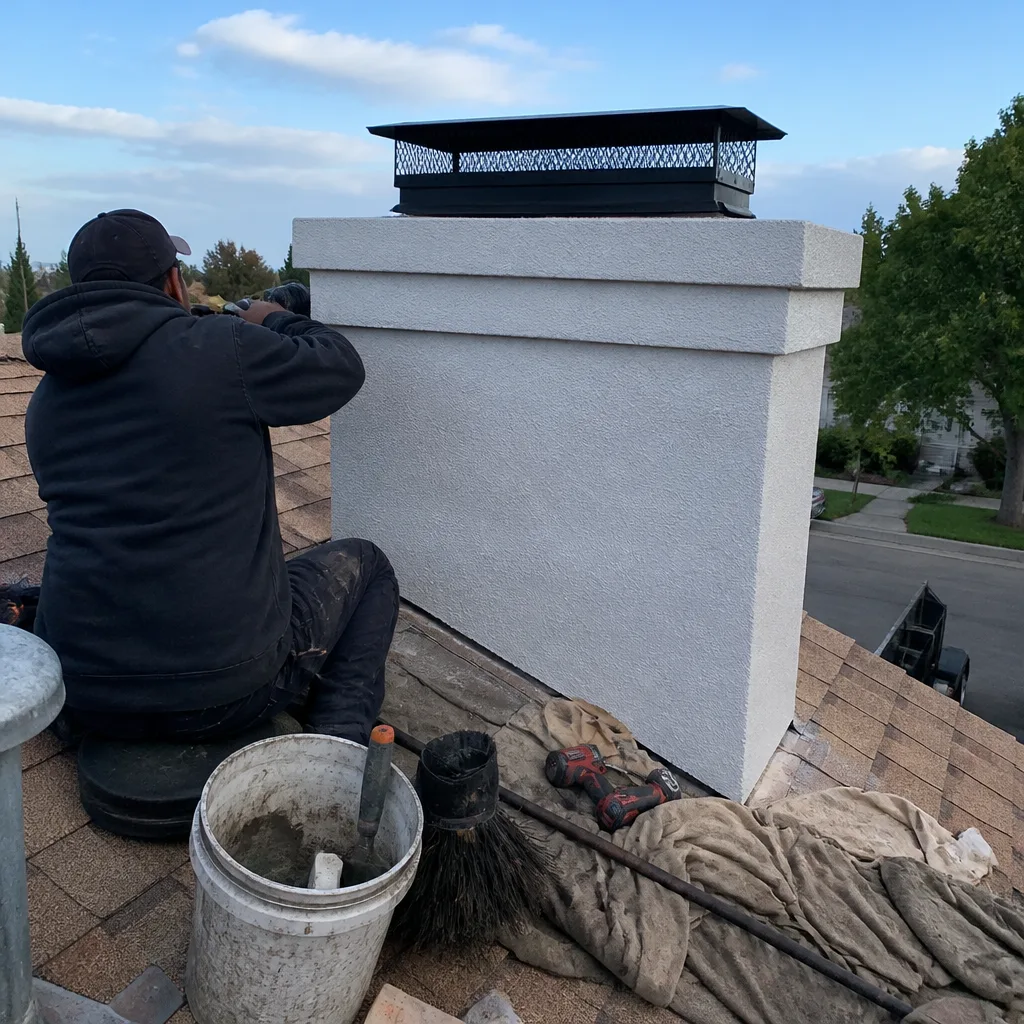
Level 1 sweep and inspection to the NFPA 211 annual standard - flue, crown, cap, and flashing checked and photographed
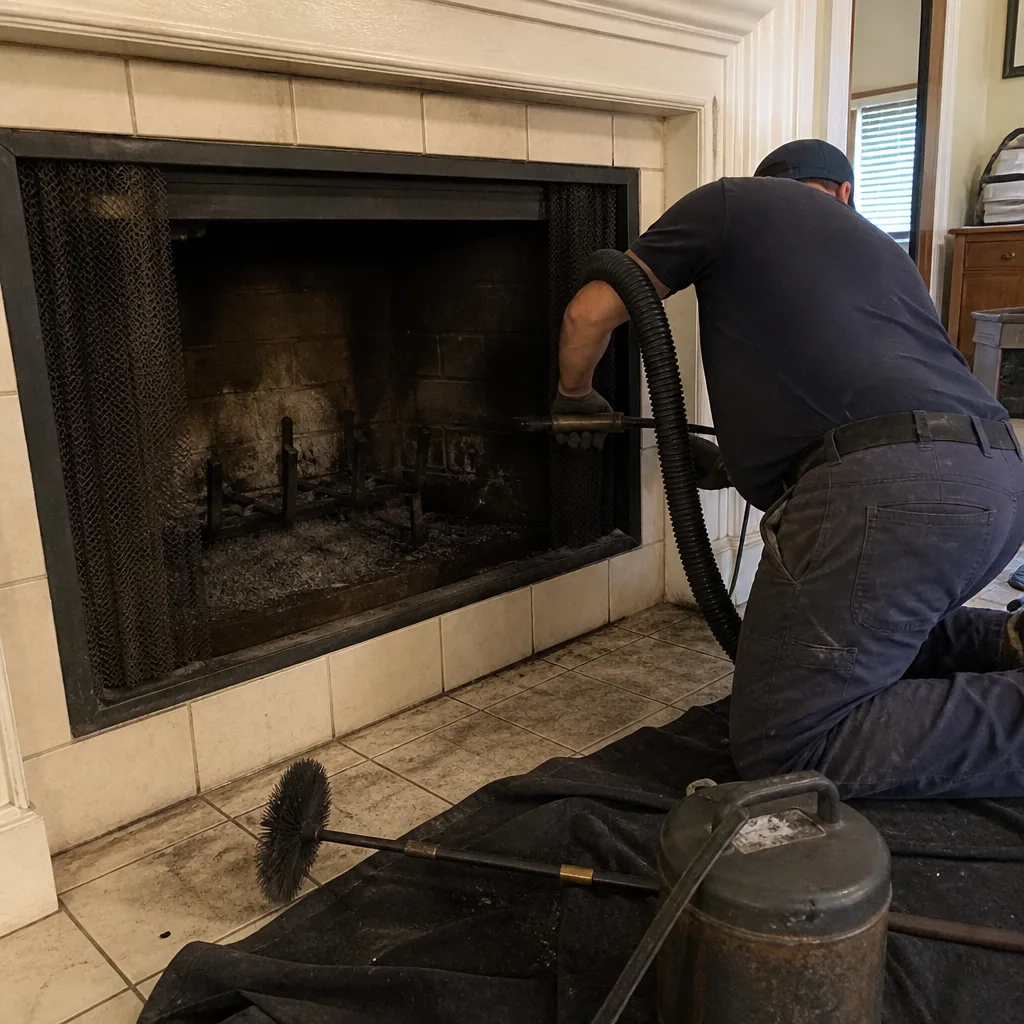
Chimney sweep logs do not sweep chimneys. They loosen some creosote - which then falls where a brush and vacuum still have to collect it.
DIY vs Professional Chimney Cleaning: The Elk Grove Homeowner’s Decision Guide
You can sweep your own flue and do a genuinely good job of removing soot, and still miss the Stage 2 creosote glazed to the upper flue tiles that a brush passes right over without dislodging. That’s the uncomfortable truth behind the DIY chimney cleaning question, and it’s one we see play out every fall in Elk Grove, where housing stock ranges from 1990s Laguna stucco builds to 1960s brick ranches near Elk Grove Boulevard. This guide isn’t a scare piece or a sales pitch. It’s a working breakdown of what you can realistically do with a brush and a drop cloth, what you genuinely cannot assess without professional equipment, and how to figure out which path makes sense for your fireplace, your roof pitch, and your tolerance for climbing ladders. By the end, you’ll know exactly what separates a legitimate DIY cleaning from a false sense of security.
Quick Answer
For most Elk Grove homeowners, DIY chimney cleaning is only appropriate as a supplemental maintenance task between professional cleanings, never as a full replacement. A homeowner with a straight flue, a one-story roof, and the right tools can remove loose soot, but cannot assess concealed damage like cracked liners, smoke chamber erosion, or Stage 2 creosote glaze. If your chimney hasn’t been camera-inspected within the last two years, the single most valuable thing you can do is schedule a professional sweep and inspection first, then decide whether DIY upkeep is worth adding to your routine.
Styles & brands we work with
- Sweep & inspection
- Caps & crowns
- Flue relining
- Masonry repair
- Gas fireplace service
Table of Contents
- What DIY Brushing Can and Cannot Physically Remove
- The Honest Cost of Doing It Right vs. the Lowball Kit Cost
- The Exact Tools a Legitimate DIY Cleaning Requires
- What You Cannot Assess Without a Camera
- Liability and Insurance Implications of DIY Chimney Work in California
- The One Scenario Where DIY Maintenance Makes Complete Sense
- How Elk Grove’s Housing Stock Changes the Equation
- Common Mistakes to Avoid
- When to Call a Professional
- Frequently Asked Questions
What DIY Brushing Can and Cannot Physically Remove
Chimney deposits are not one uniform substance. They exist on a spectrum, and where your chimney falls on that spectrum determines whether a brush will actually do anything useful. In Elk Grove, where we have damp, cool winters and hot, dry summers, that spectrum shifts with every burn season.
Here’s the basic breakdown:
- Soot: Loose, black, powdery combustion byproduct. It brushes off easily. A homeowner with decent reach can genuinely remove soot from accessible flue surfaces.
- Stage 1 creosote: A flaky, matte-black deposit that forms when smoke cools too quickly inside the flue. It has the consistency of crushed charcoal. A stiff wire brush can knock away much of it, though the upper third of the flue often gets missed by untrained arms working at awkward angles.
- Stage 2 creosote: Hard, shiny, tar-like glaze that bonds to flue tiles. This is the stuff that will not yield to standard chimney sweeping rods. It requires professional-grade rotary loop systems, chemical treatments, or in severe cases, media blasting. If your flue has Stage 2 deposits, a DIY sweep accomplishes less than you think.
- Stage 3 creosote: A hardened, crystallized fuel load that looks like black glass. It is highly combustible and cannot be removed without aggressive professional intervention. If you have this, burning one more fire before treatment is a genuine risk.
The critical detail most online guides skip: a standard wire brush passes over Stage 2 creosote without making meaningful contact. The brush flexes, the glaze stays put. You’ll pull dark dust out of the firebox and feel like you accomplished something, when the actual fuel load near the top of the flue never moved. This is precisely why we frame DIY sweeping as a supplement, not a substitute. When we perform a professional Chimney Sweep in Elk Grove, we’re not just brushing, we’re evaluating what layer of deposit actually remains after the brush does its job.
The Honest Cost of Doing It Right vs. the Lowball Kit Cost
Most DIY guides quote a chimney brush kit at $40 to $80 and leave it there. That’s not the honest cost of doing the job correctly. The kit gets you a brush and some fiberglass rods. It does not get you the safety gear, the roof access plan, or the containment situation that prevents a soot cloud from settling across your living room.
Let’s look at what a real DIY cleaning in Elk Grove actually requires if you’re doing it properly:
| Item | Realistic Cost | Notes |
|---|---|---|
| Chimney brush kit (correct size for your flue) | $45 – $90 | Size matters. Buy the wrong diameter and you’re scrubbing air. |
| Drop cloths and plastic sheeting | $15 – $30 | You’re sealing the firebox opening. Soot gets everywhere otherwise. |
| Shop vacuum with HEPA filter | $60 – $150 | A standard shop vac without the right filter blows fine soot back into the room. |
| Face mask or particulate respirator | $10 – $25 | Creosote dust is not something to breathe casually. |
| Safety glasses and gloves | $12 – $20 | Creosote is acidic and irritating to skin. |
| Ladder capable of reaching your roof safely | $120 – $350 | One-story ranch in Elk Grove? Manageable. Two-story in StoneLake? Different conversation. |
If you own none of this, a legitimate first-time DIY cleaning lands between $250 and $450. That’s before you factor in the value of a Saturday, the risk of a ladder fall, or the cost of fixing whatever you break. A professional sweep in Elk Grove typically runs $150 to $250. We’re not saying this to make the professional route look cheaper by default, though in the first year it often is – see our Chimney Cleaning Cost Breakdown: The Elk Grove Homeowner’s Reference for 2026 for a fuller picture. We’re saying it because most homeowners deserve an honest comparison, not a lowball kit price that assumes you already own everything else.
Here’s where contractor-grade equipment changes the outcome. Professional firms use rotary loop systems and whip-head attachments that spin at high RPM, physically grinding deposits off tile surfaces. The brushes most DIYers buy are static. They scrub in one plane. That’s the difference between cleaning your flue and actually removing the fuel that causes chimney fires.
The Exact Tools a Legitimate DIY Cleaning Requires
If you’ve decided to attempt this, do it right. Here’s the full list, no shortcuts:
- Correctly-sized wire chimney brush: Measure your flue’s interior dimensions first. A brush that is too small does nothing; too large and you’ll bind inside the flue and potentially crack tiles.
- Fiberglass or nylon rods: These connect to the brush and allow you to work from the top down or bottom up.
- Drop cloths and painter’s tape: Seal the firebox opening completely from the room side. Soot migrates.
- HEPA-rated shop vacuum: Not optional. A regular vacuum filter lets the finest particulate back out into your living space.
- Particulate respirator: N95 at minimum. Creosote dust contains compounds you do not want in your lungs.
- Safety glasses and work gloves: Creosote is acidic and will irritate skin and eyes.
- Proper ladder: It needs to extend at least three feet past the roof edge. It needs to be on level ground. In Elk Grove’s flat residential lots, that’s usually achievable, but two-story homes in neighborhoods like Camden Passage still mean 20+ feet of climbing with tools in hand.
- Flashlight and inspection mirror: You’ll need to check corners and the smoke shelf, which is the most commonly missed spot in DIY cleanings.
Even with all of this, you’re working blind where it matters most. You’re brushing surfaces you cannot see, on a roof you’re balanced on, dealing with a flue whose internal condition is unknown to you. That brings us to the part of this conversation most guides skip entirely.
What You Cannot Assess Without a Camera
The brush tells you one thing: what came loose. It cannot tell you anything about the structural condition of the chimney itself. In our experience in Elk Grove, the things that actually matter most are usually the things a wire brush never touches.
Chimney problems that a DIY sweep cannot find:
- Liner cracks or spalling: Clay tile liners crack from thermal stress, age, or moisture. A cracked liner allows heat and combustion gases to reach combustible framing. You cannot see this from inside with a flashlight, and you certainly cannot see it while sweeping.
- Smoke chamber erosion: The smoke chamber above the damper is often built with corbeled brick and a rough mortar skim coat. That mortar erodes over time, creating gaps that trap creosote and can allow heat transfer. DIY tools do not reach this area effectively.
- Offset tile joints: Many Elk Grove chimneys have a slight offset in the flue path. These joints are stress points. A brush runs right past them. Only a camera inspection catches the early stages of joint failure.
- Failed or missing mortar crowns: The crown is the concrete cap at the chimney top. It cracks, water gets in, freeze-thaw cycles in Elk Grove winters do the rest. By the time you see the damage inside the flue, the repair is already required.
- Hidden creosote accumulation behind the damper plate or on the smoke shelf: The two most common chamber-fire ignition points. They are notoriously hard to reach with standard rods.
This is the core argument for professional cleaning, and it’s not about ego or gatekeeping. It’s about capability. When we sweep, the brushing is only half the service. The inspection is the other half, done with video equipment that shows you exactly what’s inside your flue. If we find Stage 2 glaze or a cracked liner, we can show you the footage. You’re not taking anyone’s word for it. That documentation matters, which brings us to the question of liability.
Liability and Insurance Implications of DIY Chimney Work in California
This is the section almost no DIY guide covers, and it’s the one that matters most if something goes wrong.
In California, if a chimney fire occurs and your insurance company asks for documentation that the system was properly maintained, here’s what typically happens:
- If you have professional sweep receipts: The claim process generally proceeds normally, because a licensed professional’s inspection record demonstrates reasonable due diligence.
- If you have no receipts or only DIY work: The insurer may ask for proof that proper maintenance standards were met. Without a professional inspection report, you’re in the position of arguing that your own work met the standard of care. Some policies contain clauses that explicitly require professional cleaning for wood-burning appliance coverage.
- If a fire originates in a chimney that has not been professionally inspected within the recommended interval: You may face claim denial or partial payout. This is not speculation; it’s a known claims-adjustment pattern in the state.
There’s a second layer to this: labor and materials liability if you perform work on your own chimney and the result causes property damage. A homeowner who passes a brush through their flue and then has a chimney fire has no professional record to point to. A homeowner who hires a professional has a paper trail, an inspection report, and recourse if the work was done improperly.
None of this means you should never touch your chimney. It means you should understand the documentation gap before you decide that a $60 brush kit is “the same thing” as a professional sweep. It isn’t the same thing. The brush doesn’t produce an inspection report.
Elk Grove sits in Sacramento County, and while local code does not mandate annual professional sweeping for private residences, the International Residential Code and National Fire Protection Association Standard 211 both specify that chimneys should be inspected annually and cleaned as needed. Insurance companies know these standards. They will ask.
The One Scenario Where DIY Maintenance Makes Complete Sense
So far this guide has been fairly clear-eyed about the limits of DIY work. Here’s the other side of that coin: between professional cleanings, light DIY maintenance has a legitimate and useful role, as covered in our Seasonal Chimney Cleaning Care for Elk Grove: Year-Round Homeowner’s Guide.
The scenario that actually works:
You burn fires frequently during the Elk Grove winter season, from roughly November through February. You’re burning seasoned cordwood, and you notice fine soot beginning to accumulate in the firebox and on the first visible section of flue above the damper. You had a professional sweep and camera inspection within the last 24 months. The inspection showed a sound liner, a clear smoke shelf, and no Stage 2 or Stage 3 creosote.
In that situation, a homeowner can:
- Remove loose surface soot from the accessible lower flue using a brush size matched to the flue.
- Vacuum the firebox and smoke shelf area carefully with a HEPA vacuum.
- Check the cap and spark arrestor for visible obstruction from ground level or from the roof if safely accessible.
- Track burning habits: If you’re getting more than a quarter inch of flaky creosote in a season, the professional cleaning interval should move up.
This keeps the system cleaner between professional services, reduces the odds of a smokey fire, and gives you a baseline of what your chimney normally looks like. What it does not do is replace the professional cleaning. Think of it like this: you can vacuum your car and change your wipers, but you still bring it in for service at intervals. The vacuuming doesn’t make the oil change unnecessary.
We support this. We work with homeowners in Elk Grove who burn heavily and benefit from a mid-season light cleaning. What we’d flag is simply this: if you’re doing DIY maintenance, the professional visit you’re extending between should still happen at least every two years for a fireplace that gets regular use, and annually for heavy burners. The camera is the entire point.
How Elk Grove’s Housing Stock Changes the Equation
Elk Grove is not one kind of housing market. The city spans multiple construction booms, and each era has its own chimney profile. That matters because the DIY conversation looks different depending on which era your house came from.
Homes built in the 1960s and 1970s in established neighborhoods near Elk Grove Florin Road often have masonry chimneys with clay tile liners and mortared brick work. Those systems are now 45 to 60 years old. Clay tiles crack. Mortar joints erode. Smoke chamber skim coats fail. These are the chimneys where a brush-only approach is most likely to give false confidence, because the structural age risk is highest.
Homes built in the 1990s and 2000s, common in subdivisions around Laguna Boulevard and Sheldon Road, typically have newer masonry or prefabricated pipe systems. Many of these use factory-built chimneys, which are not designed to be swept with a standard wire brush at all. Pumice or poly brushes exist for those systems, but the wrong brush can damage the thin metal liner. When we perform repair work on these systems, we’re often sourcing components from brands like Olympia Chimney and Copperfield, which produce contractor-grade caps, dampers, and pipe components that match the original system’s specs rather than generic substitutes. If you’re going the professional route, ask about the parts being used. “Whatever fits” is not a materials strategy.
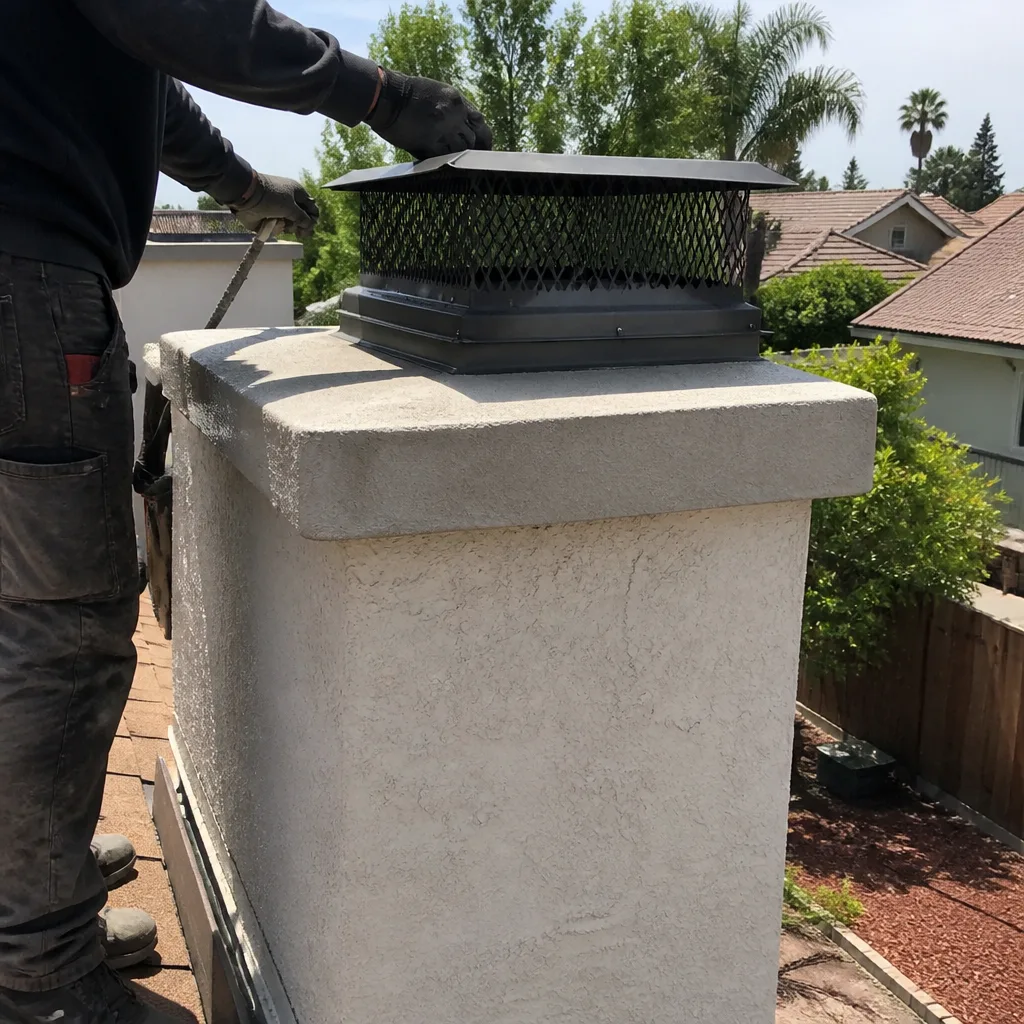
Then there’s the wildfire-adjacent reality. Elk Grove is not in the forested WUI, but it sits in a region where wind-driven ember events do occur. An intact spark arrestor and a properly sealed top damper matter. We use Gelco chimney caps and accessories in many installations, because the screen gauge and mount design are robust enough to handle repeated thermal expansion without warping. If your cap is loose or the screen is missing, that’s another thing a brush sweep won’t fix.
The broader point: where your home sits in Elk Grove’s building timeline changes what a “cleaning” actually needs to include. It also changes what failure looks like. For our full-service Chimney Repair Elk Grove home page, we break down common repair scenarios by the kind of chimney you have, because the fix differs by system type.
Common Mistakes to Avoid
- Using a wire brush on a prefabricated metal flue: Factory-built chimneys require poly or pumice brushes. A steel brush can score the thin liner, create edges that trap creosote, and void the warranty. Many Elk Grove homes built after 1995 have prefab systems, and this is a common rookie error.
- Brushing from the bottom without sealing the firebox: Soot finds its way into carpet fiber, upholstery, and HVAC filters. You’ll be finding it for months. Seal the fireplace opening with plastic sheeting and painter’s tape, then cut a small hole for the rod.
- Skipping the smoke shelf: The area behind the damper is where creosote accumulates most. DIY brushings almost always miss it because it’s awkward to reach. That accumulation is the starting point for many chimney fires.
- Buying a brush one size too small: The most common sizing error. A loose brush skims the surface and does nothing except give you the feeling of having worked.
- Using a masonry extension ladder on wet shingles with no stabilizer: After a rain, Elk Grove composition shingles are slippery. Small job, big risk. Most chimney injuries happen on the dismount, not the climb.
- Doing a DIY clean instead of an inspection, not in addition to one: The brush gets the soot. The camera gets the truth. If you have to pick one, choose the camera every time.
- Assuming a gas fireplace needs no service: Gas inserts put less creosote in the flue, but they still need venting checks, burner condition review, and glass seal integrity. A gas system that’s venting improperly is a carbon monoxide issue, not a fire issue. Still worth professional eyes.
When to Call a Professional
There’s a clear line where DIY stops making sense. Call a professional if: you see shiny or tar-like creosote in the flue; you notice a musty smell after rain; you hear water dripping inside the firebox; you see cracked or missing mortar on the exterior brick; you’ve burned more than one cord of wood since your last professional cleaning; or you’re in a home built more than 25 years ago with no prior camera inspection on record. None of these are brush problems. This is where Chimney Repair in Elk Grove becomes relevant, because these findings often lead to liner work, and a sweep-only company will refer you out, adding time. For dryer vents, the same logic applies: if your dryer runs hot to the touch or takes two cycles to dry a load, that’s a venting obstruction. We handle Dryer Vent Cleaning in Elk Grove alongside chimney work, which means one contractor covers both of your home’s leading fire-venting risks. Chimney Repair Elk Grove offers free estimates in Elk Grove, call (833) 620-0280.
Frequently Asked Questions
A standard professional chimney sweep in Elk Grove typically costs between $150 and $250, depending on the chimney’s condition, access difficulty, and whether the system is masonry or prefabricated. If you’re weighing whether to hire, our How to Hire a Chimney Cleaning Contractor in Elk Grove: A Step-by-Step Guide walks through what to look for. If the sweep reveals repair work, those costs are quoted separately and are always shown to you before any work proceeds. Call (833) 620-0280 for an exact quote, estimates are free.
The NFPA 211 standard recommends annual inspection and cleaning as needed, meaning the cleaning happens when deposit thickness exceeds one-eighth inch. For Elk Grove homeowners who burn weekly during the November-through-February season, an annual sweep is the right default. Light users can sometimes extend to 18-24 months, but only if a recent camera inspection showed no unusual accumulation.
You can physically remove loose soot with the right tools and a straight, accessible flue, but you cannot assess concealed damage or remove hardened Stage 2 creosote. A legitimate DIY cleaning also costs more than most guides claim once you account for the vacuum, ladder, safety gear, and containment supplies. It works as a supplement between professional services, not as a replacement for them.
Creosote accumulates in layers, and the upper flue sections often collect the heaviest deposits because that’s where smoke cools fastest. In a masonry chimney in Elk Grove, those deposits plus damp winters accelerate mortar erosion and liner cracking. If you then have a chimney fire, the fuel load is already there. The cleaning doesn’t prevent every problem, but it’s the only way to know what’s actually inside.
Gas fireplaces don’t produce the same creosote load as wood, but they do produce mild acidic condensate that can corrode metal flue liners over time. The bigger risk is venting failure, which creates carbon monoxide risk, and glass gasket wear, which changes combustion air. A gas insert should be checked annually by a professional who can test the venting and inspect the burner condition.
It depends on your policy, but many insurers in California require documentation of professional maintenance for wood-burning fireplace coverage. Without sweep receipts or inspection reports, a chimney fire claim can be denied or reduced on the argument that reasonable maintenance was not demonstrated. The cost of maintaining a paper trail is one professional cleaning every year or two, which is modest compared to the claim amount.
The Bottom Line
The DIY-versus-professional question in chimney cleaning isn’t really about the brush. It’s about the camera. A homeowner in Elk Grove can absolutely learn to remove loose soot and keep a firebox tidy between professional visits, and for a specific profile, that’s a fine practice. But the things that actually cause chimney fires in this city’s aging masonry chimneys are concealed: hairline liner cracks behind the damper, Stage 2 glaze in the upper third, eroding smoke chamber mortar, failed crowns that let moisture in. None of those show up on a brush. None of them get fixed by one. If your goal is a chimney that’s safe to burn in, the professional cleaning and inspection is the foundation. The DIY work is the maintenance between foundations. They’re different jobs. Do the one you’re equipped for, and call someone equipped for the rest.
Written by the team at Chimney Repair Elk Grove, serving Elk Grove since 2012.
See the difference
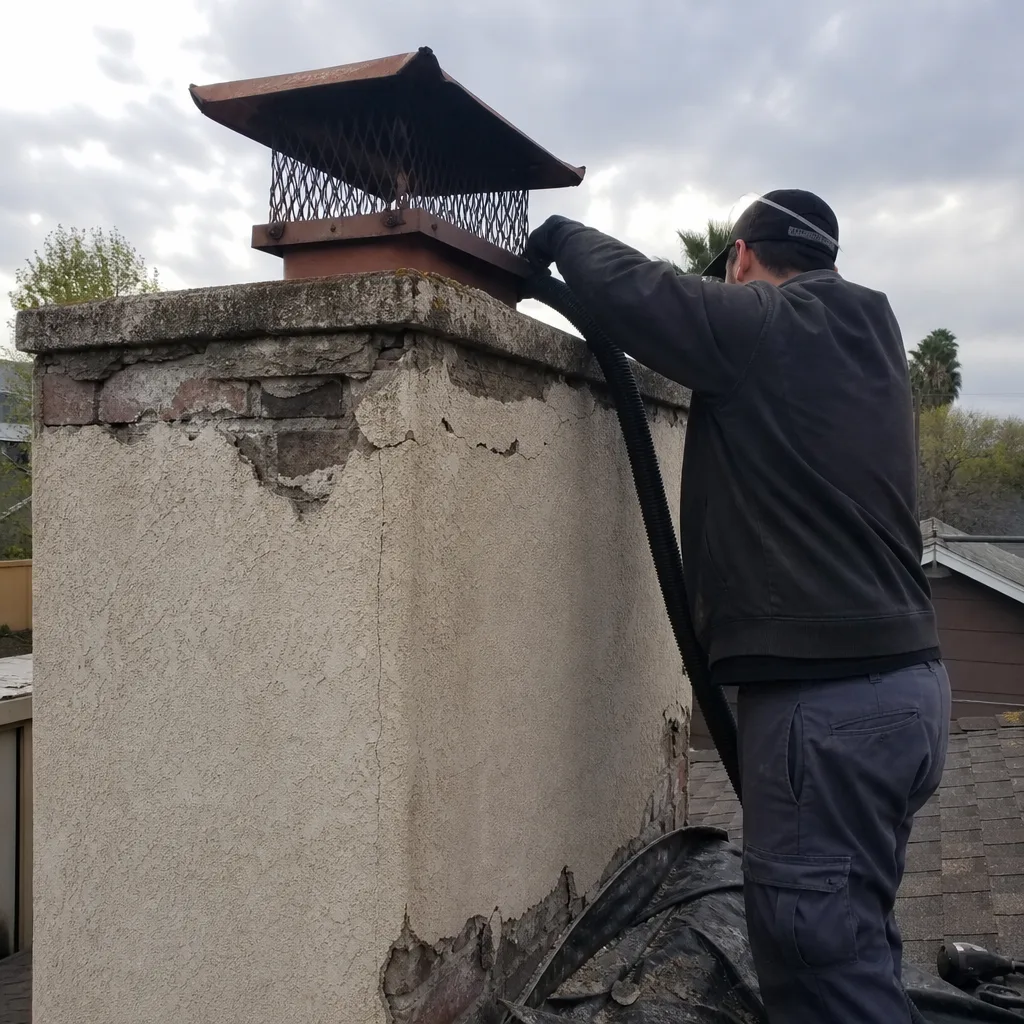 Before
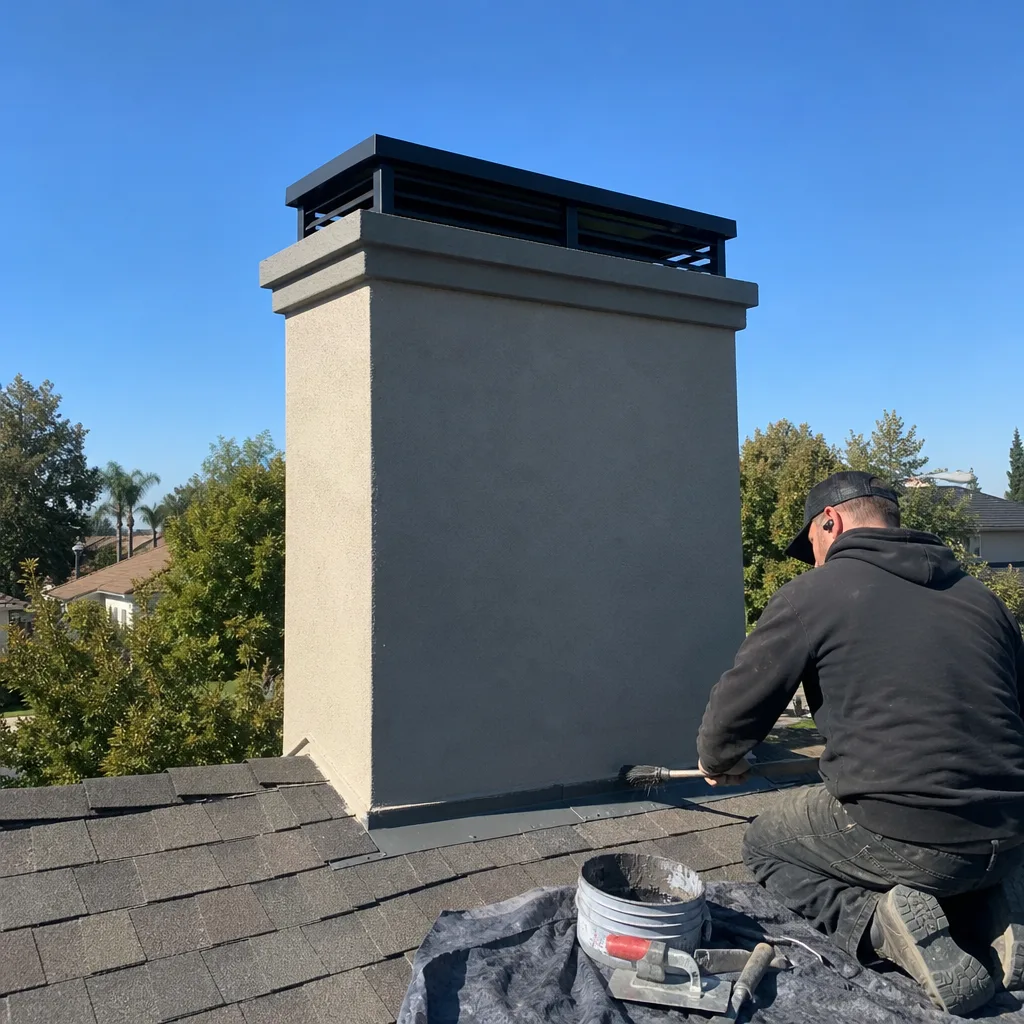 After
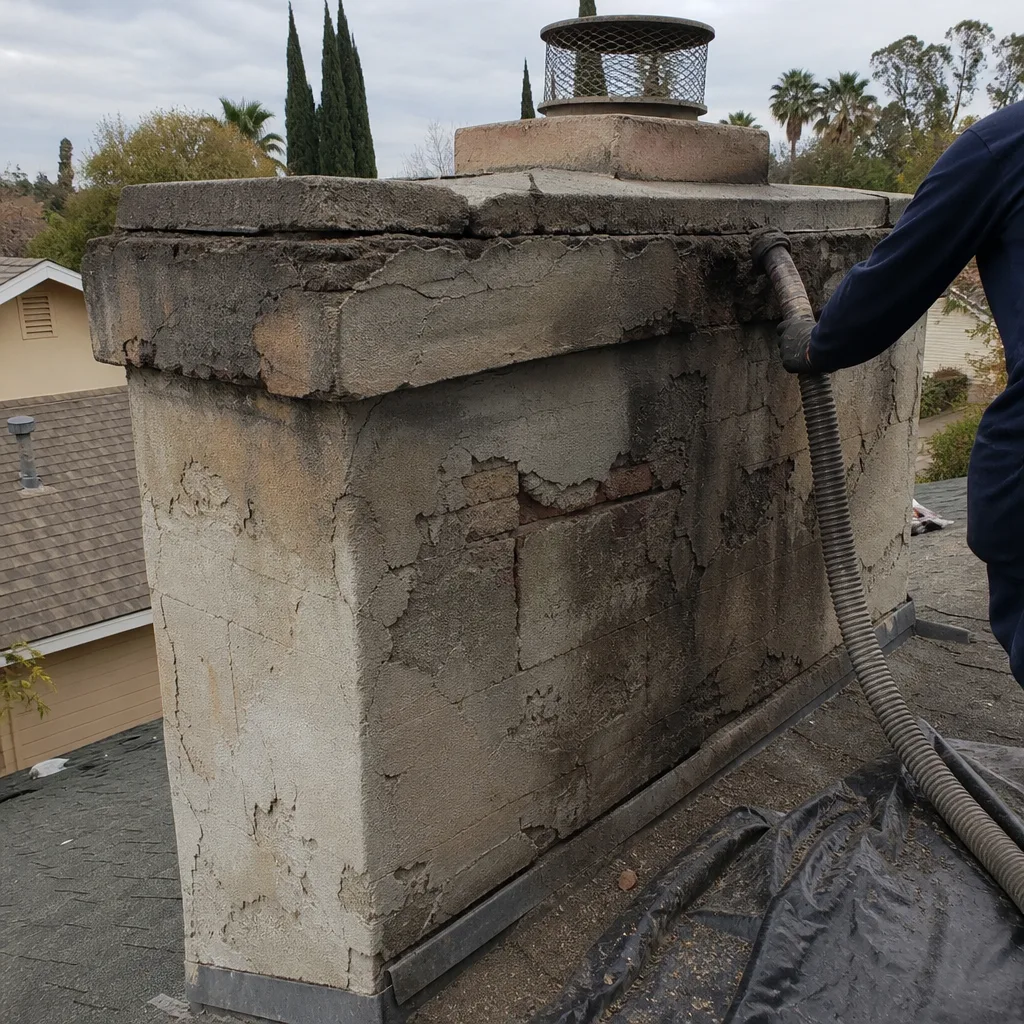 Before
 After
 Before
 After