
Last updated November 2, 2026
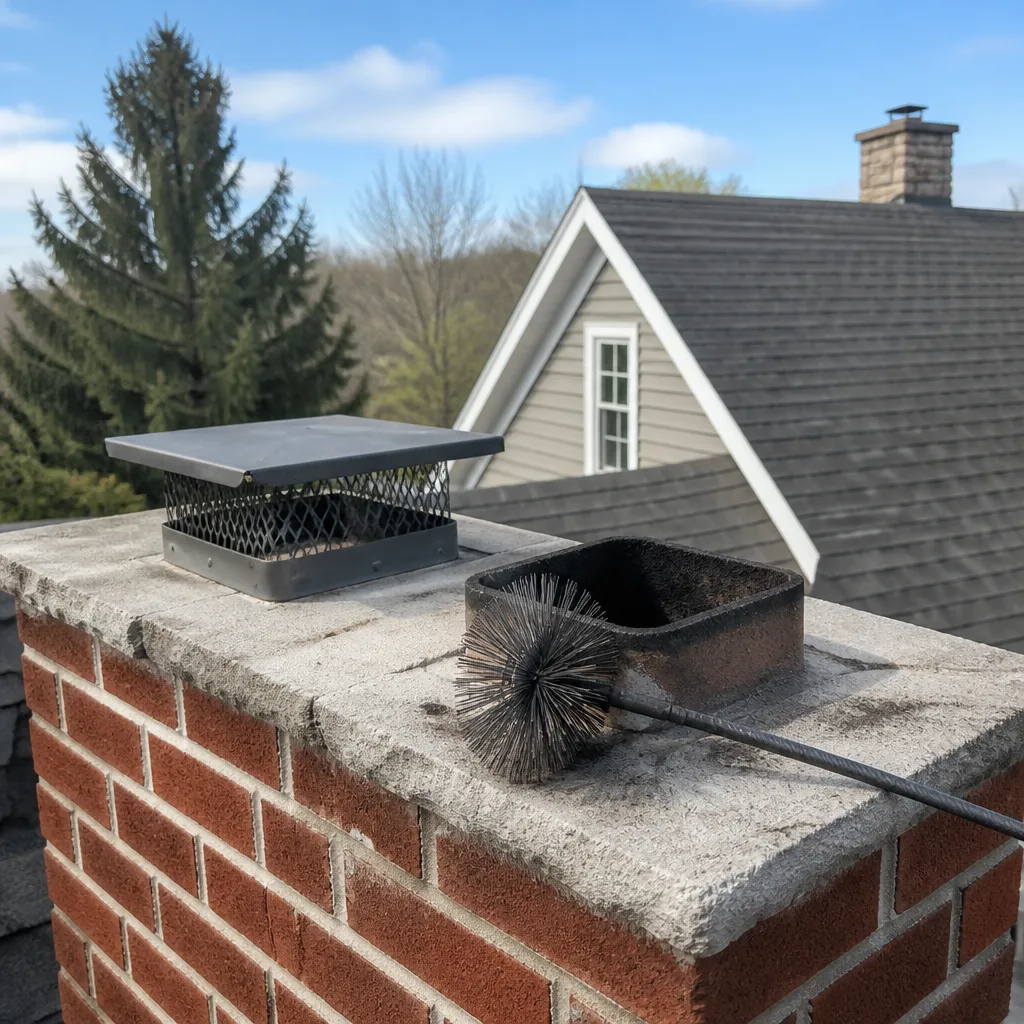 Sweep & inspection
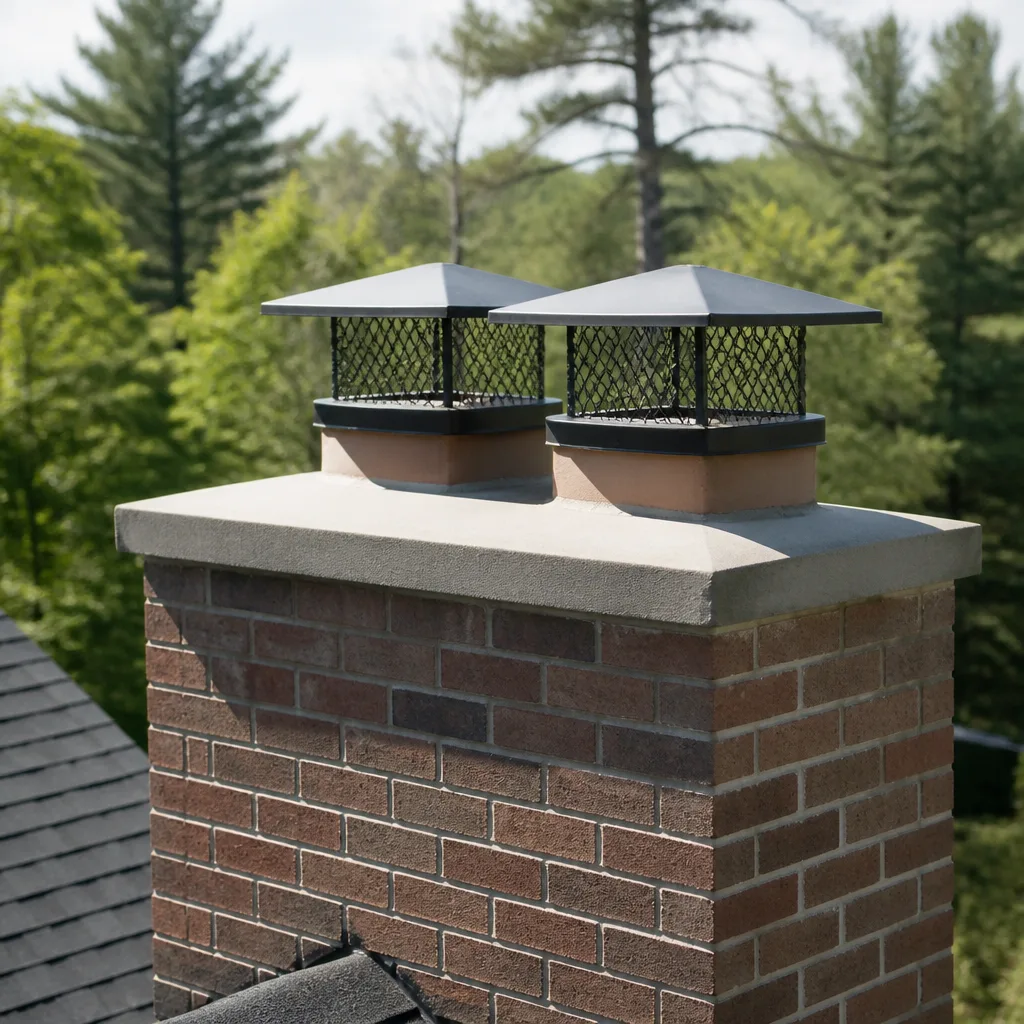 Caps & crowns
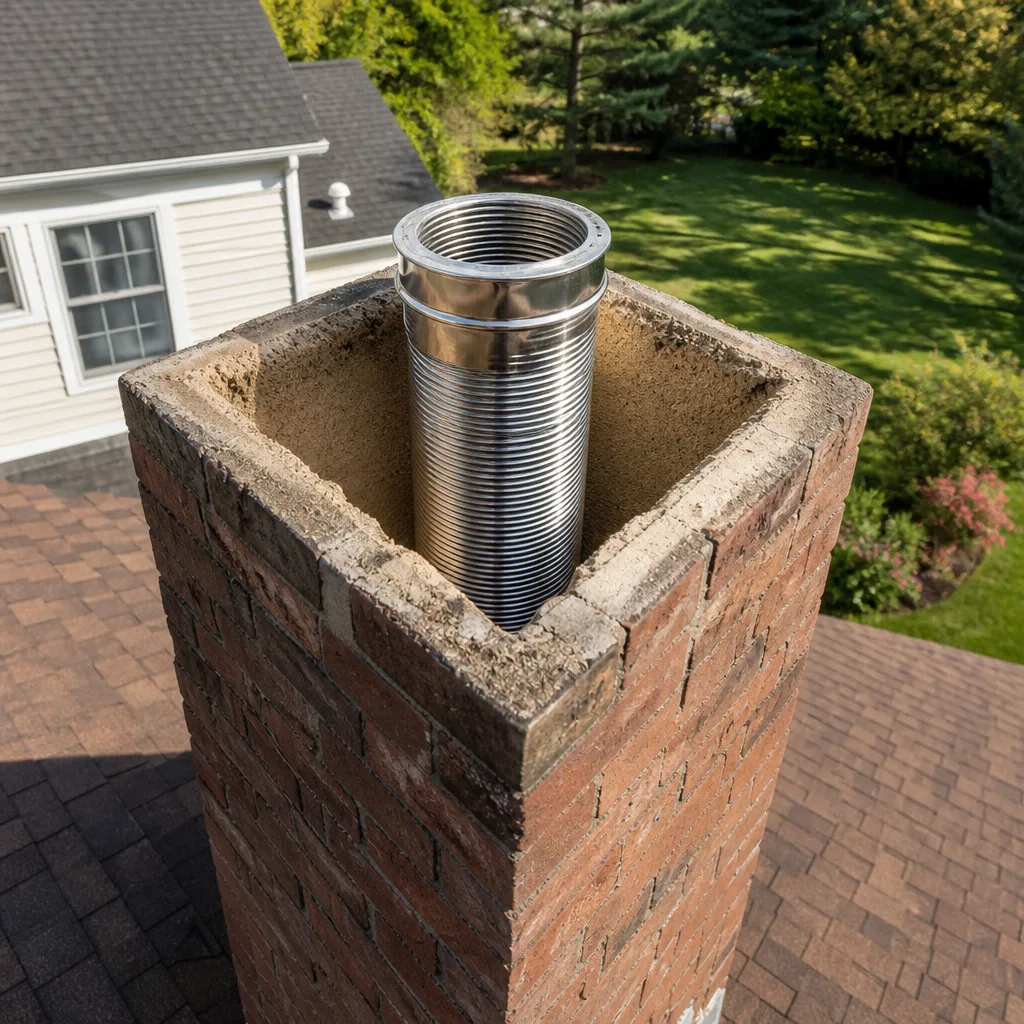 Flue relining
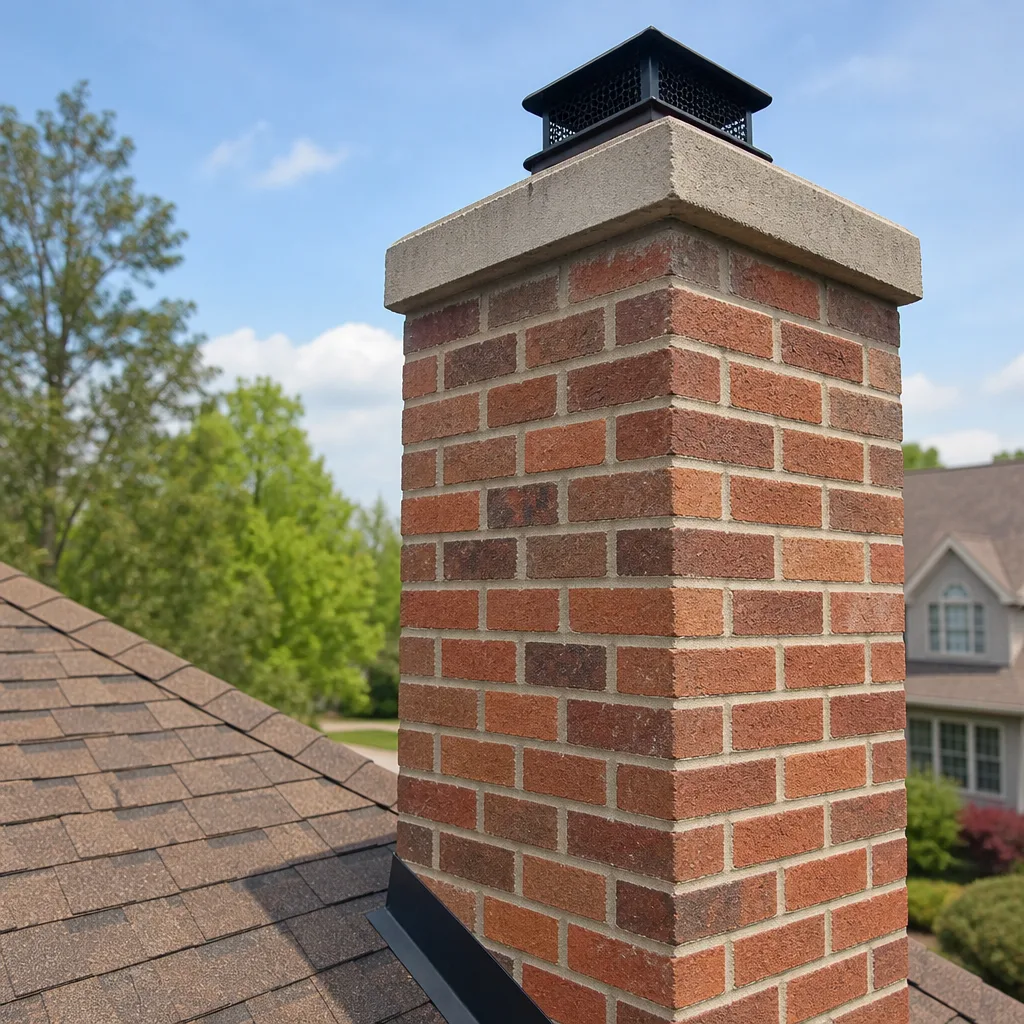 Masonry repair
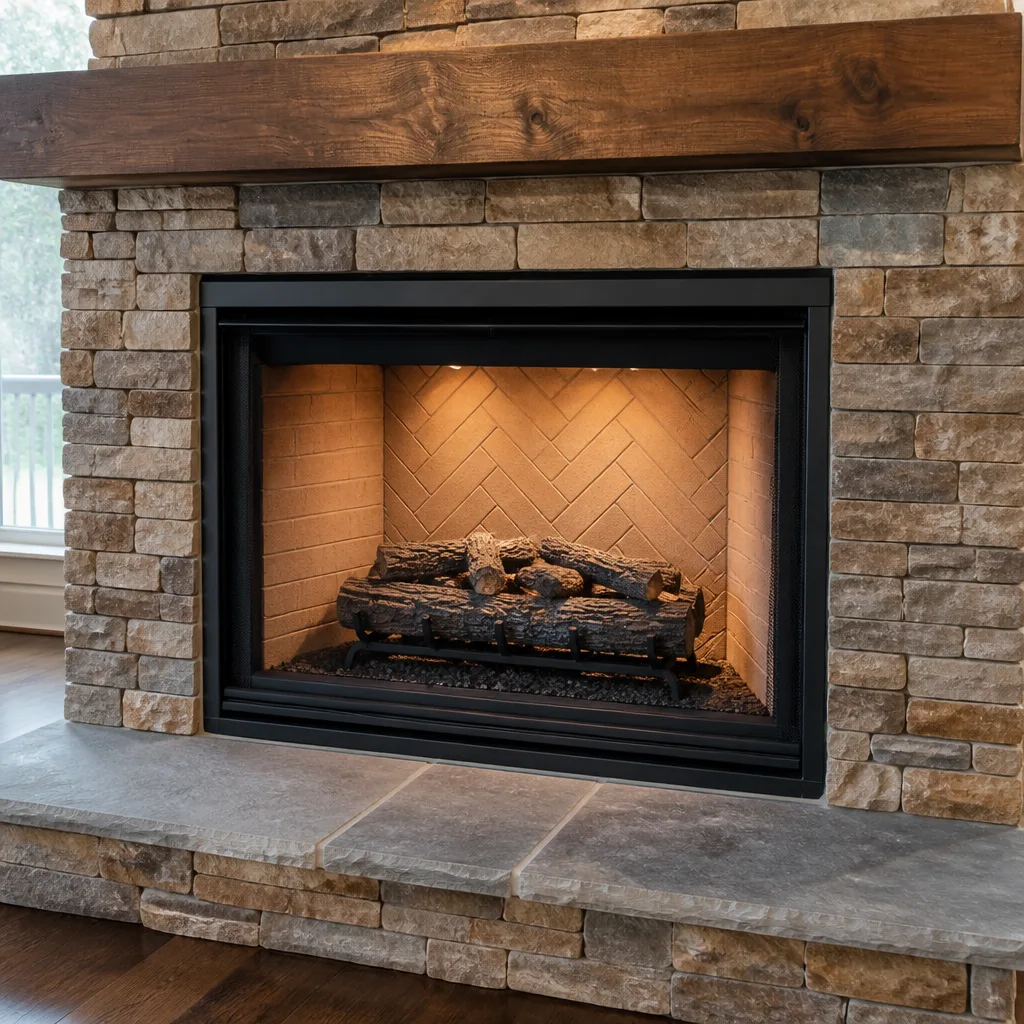 Gas fireplace service
Level 1 sweep and inspection to the NFPA 211 annual standard - flue, crown, cap, and flashing checked and photographed
Chimney sweep logs do not sweep chimneys. They loosen some creosote - which then falls where a brush and vacuum still have to collect it.
Chimney Cleaning Emergency Preparedness Guide for Elk Grove Homes
Every winter, Elk Grove’s Tule fog settles into the valley floor and lingers for days. That thick, ground-hugging fog doesn’t just make driving dangerous. It flips the normal airflow around your house, and for homes with wood-burning fireplaces, that inversion layer can turn a routine evening fire into a backdrafting event that pushes smoke and carbon monoxide into your living room while you’re sitting right there. Most people don’t find out their chimney has a problem until a cold December night when the fog’s pressed in, the fire’s roaring, and the room starts filling with haze they can’t explain. This guide walks through what actually constitutes a chimney emergency in Elk Grove, what to do in the first moments, and what preparation makes the difference between a scare and a disaster.
Quick Answer
A chimney emergency in Elk Grove is any condition where combustion gases, smoke, or fire can’t exit the home safely. The four emergencies homeowners face are active chimney fires, carbon monoxide backdrafting during Tule fog inversions, blocked flues from animal nests or debris, and sudden structural failures like liner cracks that expose framing to heat. Preparation means having working CO detectors positioned correctly, knowing how to shut down a fire fast, and having a chimney contractor’s number saved before burn season starts.
Styles & brands we work with
- Sweep & inspection
- Caps & crowns
- Flue relining
- Masonry repair
- Gas fireplace service
Table of Contents
- Recognizing an Active Chimney Fire: What It Sounds Like and the First 90 Seconds
- CO Detector Placement in Elk Grove Homes: Why Location Determines Whether You Get a Warning
- How to Safely Shut Down a Fireplace You Suspect Is Blocked
- Animal Blockages: What to Do When Something’s Living in Your Chimney
- Tule Fog Inversions and Backdrafting: The Elk Grove-Specific Risk
- Emergency Information to Have Ready Before Burn Season Starts
- Building a Chimney Emergency Kit
- Prevention: What a Proper Inspection Actually Catches
Recognizing an Active Chimney Fire: What It Sounds Like and the First 90 Seconds
Chimney fires are louder than most people expect. They don’t start with a quiet crackle. In Elk Grove homes with unlined or deteriorating masonry chimneys, creosote that’s built up over a season or two ignites fast, and the sound is unmistakable. Homeowners describe it as a roar like a jet engine at low altitude, a deep rumbling that vibrates through the walls, or a freight train passing directly overhead. Some compare it to heavy rain on a tin roof, except the rain is coming from inside the chimney. If you hear any of these sounds while a fire is burning, you’re dealing with an active chimney fire.
Your first 90 seconds matter. Here’s the sequence:
- Close the damper fully. This cuts off the fire’s oxygen supply from below. A chimney fire feeds on airflow, and closing the damper is the single most effective thing you can do in the first moment.
- Close the fireplace doors or glass screen. If you have glass doors, shut them. If you have a screen, leave it in place. This contains sparks and embers from popping out into the room.
- Do NOT use water. Water inside a hot masonry chimney causes thermal shock. The rapid cooling can crack clay flue tiles and the mortar joints, turning a chimney fire into a structural failure. Water can also turn to steam instantly, creating pressure that blows ash and embers back into the room.
- Do NOT attempt to climb on the roof or use a fire extinguisher in the chimney. Extinguishing chemicals are corrosive to refractory materials and will damage the flue lining. The goal in the first 90 seconds is containment, not extinguishing.
- Evacuate the home and call 911. Once the damper is closed and the doors are secured, get everyone out. Chimney fires can spread into the attic and wall cavities through cracked mortar joints without being visible from the living room.
What we’ve seen in Elk Grove homes after a chimney fire is telling. The fire often stays contained within the flue, but the aftermath reveals cracked tiles, separated mortar joints, and creosote that’s baked into a hard, glassy glaze that’s even harder to remove than the original buildup. A Chimney Sweep in Elk Grove can assess the damage after the fire department clears the scene. In some cases, the flue has sustained enough damage to require a HeatShield resurfacing application or a full DuraFlex liner replacement. The critical point: even a chimney fire that seems minor has likely compromised the system’s safety, and burning again before an inspection is a gamble you don’t want to take.
CO Detector Placement in Elk Grove Homes: Why Location Determines Whether You Get a Warning
Carbon monoxide is odorless, invisible, and slightly lighter than air. In a home with a blocked or backdrafting chimney, CO accumulates in the room where the fireplace is located first, then spreads upward and through doorways. Where you place your CO detectors determines whether you get woken up at 2 a.m. when CO levels are at 50 parts per million, or whether the first sign of a problem is a headache that never goes away.
Here’s what most Elk Grove homes get wrong: they put a single CO detector in a hallway outside the bedrooms, which is fine for general protection, but it doesn’t help when the source is the fireplace in the living room. CO from a backdrafting fireplace pools in the living space first, and by the time it reaches a hallway detector, concentrations in the room where you’re sitting have already climbed much higher.
Proper placement for fireplace protection:
- One detector in the same room as the fireplace. Mount it on the wall or ceiling, at least 15 feet away from the firebox to avoid false alarms from normal combustion gases during startup.
- One detector on each level of the home. CO moves upward, so a two-story Elk Grove home needs coverage on both floors.
- One detector outside each sleeping area. This is building code in California, but it’s the minimum, not the optimal setup for fireplace protection.
- Replace detectors every 7-10 years. CO sensors degrade over time. Check the manufacture date on the back. A detector that’s 12 years old is decorative, not protective.
The specific problem with Tule fog nights in Elk Grove is that CO events happen slowly. A chimney that backdrafts during an inversion doesn’t usually push out big clouds of visible smoke. It seeps. CO levels climb gradually over hours while the house is closed up and the family’s asleep. That’s exactly the scenario where a properly placed detector is the only thing standing between a family and a late-night 911 call, or worse.
How to Safely Shut Down a Fireplace You Suspect Is Blocked
If you light a fire and notice smoke rolling back into the room, or you hear water dripping in the flue, or you smell something animal-like coming down the chimney, or the fire just won’t draw properly even though the damper’s open: stop. Don’t keep feeding the fire to see if it gets better. It won’t.
Here’s the shutdown sequence, in order:
- Stop adding wood immediately. The less fuel burning, the fewer combustion gases being produced, the less that can back up into the room.
- Open a window near the fireplace. This seems counterintuitive on a cold Elk Grove night, but a stuck chimney usually means the house is air-starved. Modern Elk Grove homes are sealed tight for energy efficiency, and that tightness is exactly what starves a fireplace of the air it needs to draft properly. Opening a window breaks the negative pressure and often stops the backdrafting within seconds.
- Let the fire burn down. Don’t use water to douse it, and don’t attempt to move burning logs. Closing the damper on a smoking fire traps the smoke in the house. Let it burn out with the window open, then close the damper once the fire is fully out and the embers are cold.
- Do not use the fireplace again until it’s inspected. A single backdrafting event is a symptom. The cause could be a bird nest, a dislodged flue tile, a blocked spark arrestor, or a pressure problem in the home itself. Burning again risks a repeat that’s worse than the first.
- Call a chimney contractor. This is where Chimney Repair Elk Grove home comes in. We do a full inspection with camera documentation, so you see exactly what’s blocking the flue and what it’ll take to fix it. No guesswork, no upsell without proof.
One thing homeowners in Elk Grove’s older neighborhoods should know: many of these homes were built with masonry fireplaces that were designed for a different era of construction. The houses breathed more. Air leaked in around windows and through wall cavities. A fireplace that drafted fine in 1985 may struggle in the same house after new windows and insulation have sealed everything up. If you’ve tightened your home’s envelope and your fireplace suddenly doesn’t draw like it used to, the problem might not be the chimney at all. It might be that your firebox needs a fresh air vent, which is a repair we do regularly.
Animal Blockages: What to Do When Something’s Living in Your Chimney
Elk Grove’s mix of mature oak trees, open greenbelt spaces, and older masonry chimneys without caps makes for a lot of animal encounters. Raccoons, squirrels, and birds all see an open flue as a tree cavity. In April and May, chimney swifts migrate through the Sacramento area and are protected by federal law, meaning you can’t legally remove them or their nests while they’re actively nesting. In fall and winter, raccoons looking for a warm den find uncapped chimneys ideal.
If you hear scratching, chirping, or animal noises coming from your chimney:
- Do not light a fire. A fire will not “smoke them out” humanely. You’ll end up with a dead animal in your flue, or worse, a live animal fleeing through the damper into your house.
- Do not attempt to trap or remove it yourself. Raccoons are aggressive when cornered. Bats, if present, carry rabies risk. Wildlife removal in California has its own regulations and licensing requirements.
- Identify the sound. High-pitched chirping from spring through summer is likely chimney swifts, which are federally protected. Scratching and chattering at night is likely a raccoon. Squirrels are diurnal, so daytime scurrying points to squirrels.
- Call a licensed wildlife removal service first. They’ll assess the animal, determine whether it’s protected, and handle removal humanely. Sacramento County has specific protocols, and a good wildlife removal company knows them.
- Once the animal is removed, call us for a chimney inspection. The animal’s been there for weeks or months. There’s a nest, droppings, and possibly dead young in the flue. All of that has to be removed before you burn again, and the flue may have damage from urine and feces that calls for a deeper cleaning or a HeatShield liner treatment.
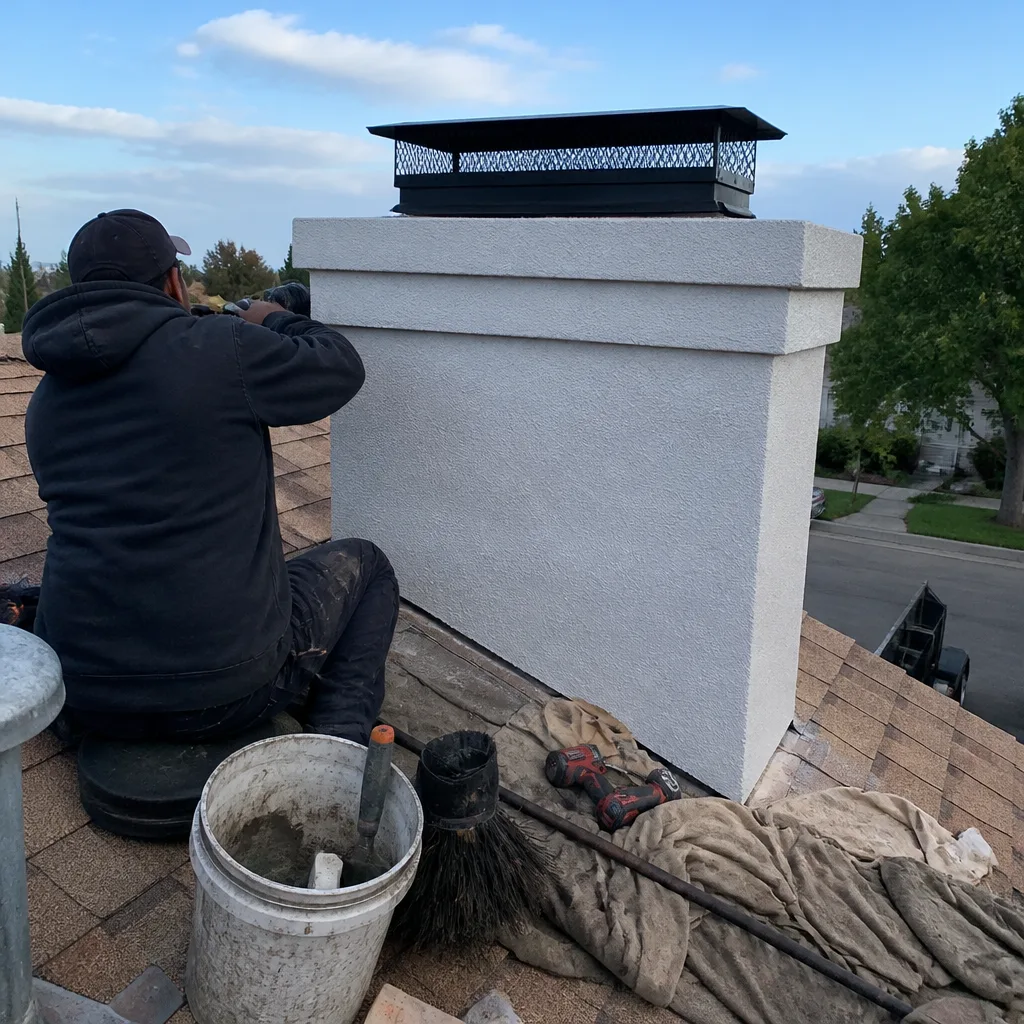
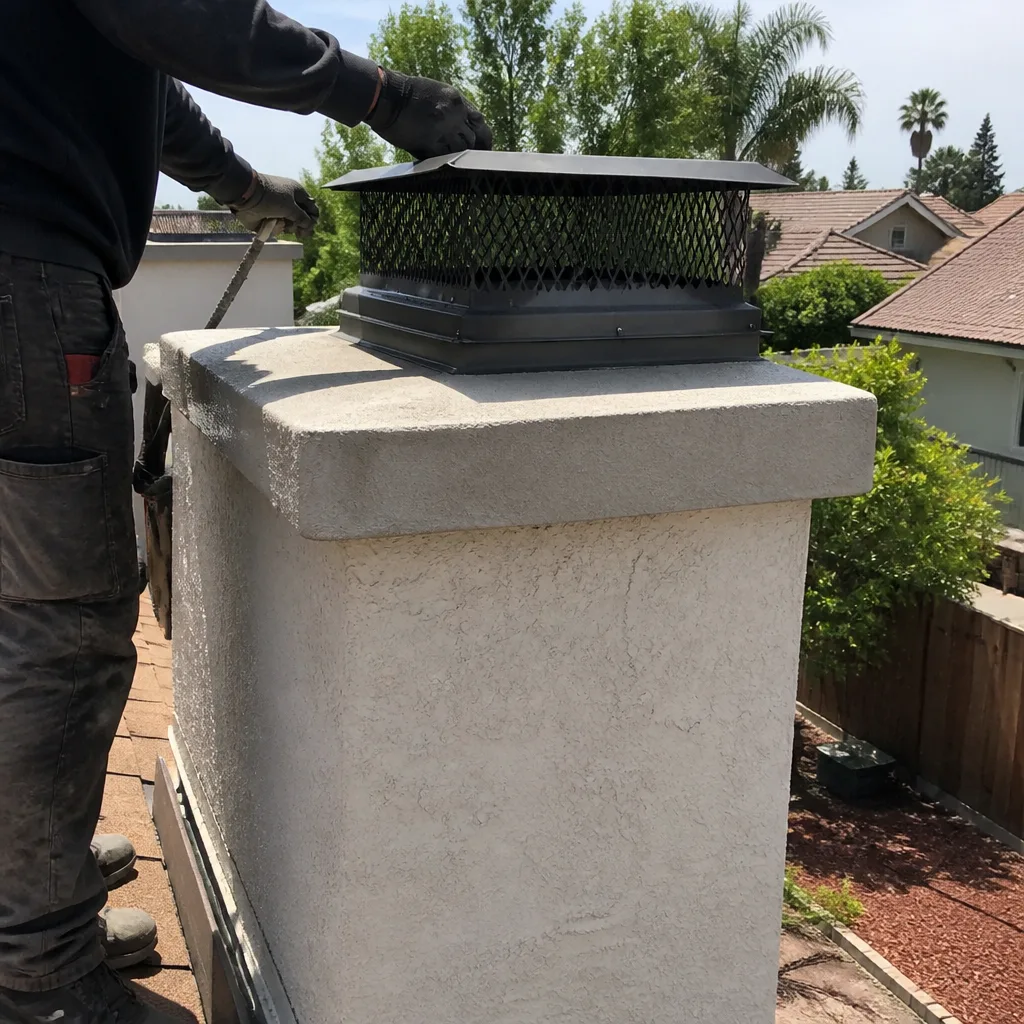
The real fix is prevention. A proper chimney cap from Famco or Copperfield keeps animals out year-round, and it’s one of the lowest-cost repairs relative to the damage it prevents. If your chimney doesn’t have a cap, or the one it has is rusted through or askew, that’s the gap animals are using. We install contractor-grade caps that are sized correctly for the flue and installed with the right clearance for proper draft.
Tule Fog Inversions and Backdrafting: The Elk Grove-Specific Risk
Tule fog is a Central Valley phenomenon, and Elk Grove sits in the middle of it. When the fog settles in December and January, it creates a temperature inversion: cold air trapped at ground level with warmer air above it. That inversion layer acts like a lid on the valley, and for chimneys, it changes the pressure gradient that normally pulls smoke up and out.
Here’s what’s actually happening. A chimney drafts because hot air rises, creating a pressure difference between the firebox and the outside air. Under normal conditions, the warm flue gases are warmer than the outside air, so they rise. During a Tule fog inversion, the cold air at ground level is dense and stable. The flue gases are still hot, but the pressure differential is weaker, and in some conditions, the inversion actually pushes down on the chimney, making it harder for smoke to exit. Add in a tight Elk Grove house with all the windows closed on a cold night, and you’ve got the three conditions that cause backdrafting: weak draft, sealed house, and a fire that’s producing more gas than the chimney can handle.
What homeowners notice: smoke coming into the room when the fire’s first lit, flames that seem to “hesitate” and flip direction, and a persistent smoky smell in the house even after the fire’s going. Some people blame wet wood, and wet wood does make creosote worse, but draft failure during an inversion is a pressure problem, not a fuel problem.
The fix isn’t always a chimney repair. In some homes, a properly sized flue and a clean chimney will still struggle on the worst inversion nights. The practical advice for Elk Grove homeowners:
- Burn only on nights when the fog has lifted. Clear, cold nights are fine. Foggy, still nights are the risky ones.
- Open a window a crack. It sounds wasteful, but it equalizes pressure and often solves the backdrafting immediately.
- Start with a small, hot fire. A big log load produces a lot of cold smoke when it first ignites. Use kindling and small splits to get the flue hot fast, then add larger wood.
- Have your chimney swept before the fog season starts. Creosote buildup narrows the flue passage, and every bit of narrowing makes the draft weaker. A clean chimney drafts better, period.
If you’re experiencing backdrafting every time you burn, regardless of the fog, that’s a sign of something structural: an undersized flue, a chimney that’s too short, a failing liner, or a home that’s tighter than the chimney’s air supply can support. A Chimney Repair in Elk Grove inspection can identify which of those is your issue, and we photograph everything so you see the proof yourself.
Emergency Information to Have Ready Before Burn Season Starts
November through February is burn season in Elk Grove, and that’s when chimney emergencies cluster. The best time to prepare is October, before the first cold snap. Here’s what to have posted or saved in your phone:
- Your chimney contractor’s number. (833) 620-0280 gets you Chimney Repair Elk Grove for sweeps, inspections, and repairs. Save it now. When a chimney emergency hits, you don’t want to be scrolling through search results.
- The Sacramento Metropolitan Air Quality Management District (SMAQMD) number and website. They regulate wood-burning restrictions during high-pollution days. On a “No Burn” day, lighting a fire is illegal in much of Sacramento County, and you can check status online or by phone. Don’t create an emergency by violating a burn ban.
- Your homeowner’s insurance policy details, specifically the chimney and fire coverage. Many policies cover chimney fire damage, but the extent varies. Some cover the chimney repair but not the creosote removal that led to the fire. Others cover the full cleanup and rebuild. You should know which category you’re in before something happens.
- Poison Control:(833) 620-0280. For suspected CO exposure, call this number for guidance. If symptoms are severe (confusion, loss of consciousness), call 911.
- Your local fire department’s non-emergency number. On non-emergency chimney smoke concerns, the fire department’s non-emergency line is the right call. For active fires, always call 911.
One thing we hear every year from Elk Grove homeowners after a chimney fire: they didn’t know their insurance wouldn’t cover the full cleanup. Some policies exclude creosote removal on the grounds that it’s “maintenance,” and maintenance neglect is not a covered loss. Others require proof of an annual chimney sweep within the last 12 months before they’ll pay a chimney fire claim. This is worth a phone call to your insurance agent now, before anything happens. Ask directly: “If my fireplace causes a chimney fire, what’s covered, what’s excluded, and what documentation do I need to file a claim?”
Building a Chimney Emergency Kit
You probably have a first aid kit and a flashlight somewhere. A chimney emergency kit is the same idea, but it’s specifically about fire containment and communication. Here’s what to keep in a sealed container near the fireplace, or at least in a known location:
- Fire-resistant gloves. For handling hot tools, closing dampers, or moving fireplace screens if needed.
- A fire extinguisher rated for Class A fires. This is for the room, not the chimney. If embers pop onto a rug or the hearth, a Class A extinguisher handles it. Never discharge it into the chimney itself.
- A metal ash bucket with a lid. For removing ashes, always. Never use a plastic bucket or cardboard box. Ashes can stay hot for days, and a plastic bucket of “cold” ashes has started more than one Elk Grove garage fire.
- A flashlight with fresh batteries. When the power goes out during a storm and you have no heat except the fireplace, you need to see what you’re doing.
- Written emergency numbers. On paper, not just in your phone. Phones die, and during a large-scale grid outage, you may not have cell service. The paper list includes your chimney contractor, the fire department non-emergency line, Poison Control, and your insurance agent.
- A CO detector with fresh batteries. Keep a spare in the kit. If your mounted detector dies at 11 p.m. on a cold night, the spare goes in immediately.
This kit takes 20 minutes to assemble and costs less than $50. But when the chimney’s smoking, the power’s out, and you’re standing in a dark living room trying to remember the fire department’s number, that kit is worth more than everything else in the room.
Prevention: What a Proper Inspection Actually Catches
An emergency you never have is the best kind. The reason the National Fire Protection Association recommends an annual chimney inspection isn’t because sweeps need work. It’s because creosote accumulates predictably, animals move in quietly, and liner damage progresses slowly until it doesn’t. Most chimney emergencies in Elk Grove are the result of two or three years of skipped maintenance, not a single bad night – so watch for the Chimney Cleaning Warning Signs: An Elk Grove Homeowner’s Reference Guide before it’s too late.
A proper inspection catches:
- Creosote buildup at levels that increase fire risk. More than 1/8 inch of creosote is the threshold where the NFPA recommends removal. We see far worse than that in chimneys that haven’t been swept in two or three years.
- Cracked flue tiles. Clay tile liners crack from thermal stress over time. Those cracks let heat and gases reach the masonry and, eventually, framing. A HeatShield application can reline a cracked flue without a full tear-out, and it’s a repair sweep-only companies can’t offer.
- Rust holes in metal liners. Older homes with retrofit liners may have liners that are rusting through. A full relining with a DuraFlex system is the proper fix, and it’s a repair that brings the chimney back to code.
- Missing or damaged caps. The cap is your first line of defense against animals and rain. A cracked or rusted cap is an open invitation.
- Damper problems. A damper that doesn’t seal fully wastes heat and can contribute to draft problems. A damper that sticks open is a safety issue.
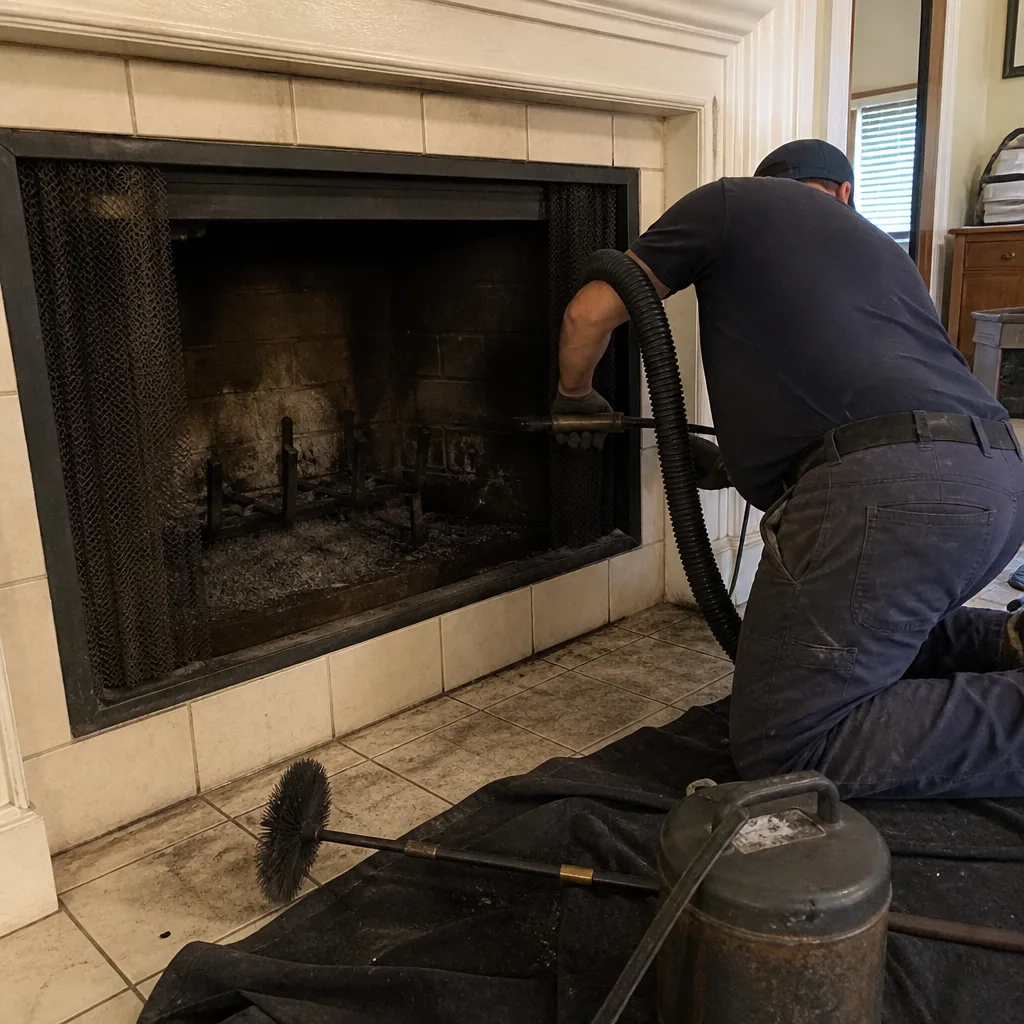
For Elk Grove homeowners, the cost of an annual chimney sweep is a small fraction of what a chimney fire or liner replacement costs. Our sweeps include a full inspection with camera documentation, so you see the condition of the flue yourself. If there’s a problem, you see it on the screen, and you know exactly what you’re paying to fix. If there’s no problem, you get peace of mind and a clean chimney for the season. That’s the whole deal. We also handle dryer vents, because lint fires are the other silent home fire risk, and a Dryer Vent Cleaning in Elk Grove addresses that side of the house too.
Common Mistakes to Avoid
- Throwing water on a chimney fire. Thermal shock cracks clay tiles. Steam pressure pushes embers into the room. Water in a hot chimney causes more damage than the fire itself might have.
- Keeping a single CO detector in a hallway and calling that good enough. CO from a fireplace accumulates in the living room first. If your only detector is outside the bedrooms, you could be breathing elevated CO for hours before it triggers.
- Assuming “no burn day” rules don’t apply in Elk Grove. SMAQMD burn restrictions cover most of Sacramento County. Burning on a prohibited day is a violation, and it’s avoidable with a quick check.
- Lighting a fire to “smoke out” an animal. This kills protected bird species, creates a biohazard in your flue, and can start a chimney fire from the nest material. It also doesn’t work the way people think.
- Ignoring a single backdrafting event. Smoke in your house once is a warning. The cause doesn’t fix itself. Every backdraft is a CO exposure risk, even if you didn’t smell much.
- Waiting until the first cold snap to call for a sweep. Every chimney contractor in Elk Grove is booked solid in November and December. Scheduling your sweep in September or October means you’re ready when the fog comes, not on a waitlist.
- Not knowing what your insurance covers. After a chimney fire is the worst time to discover your policy excludes creosote removal. That’s a five-figure surprise, and it’s avoidable with a phone call now.
See the difference
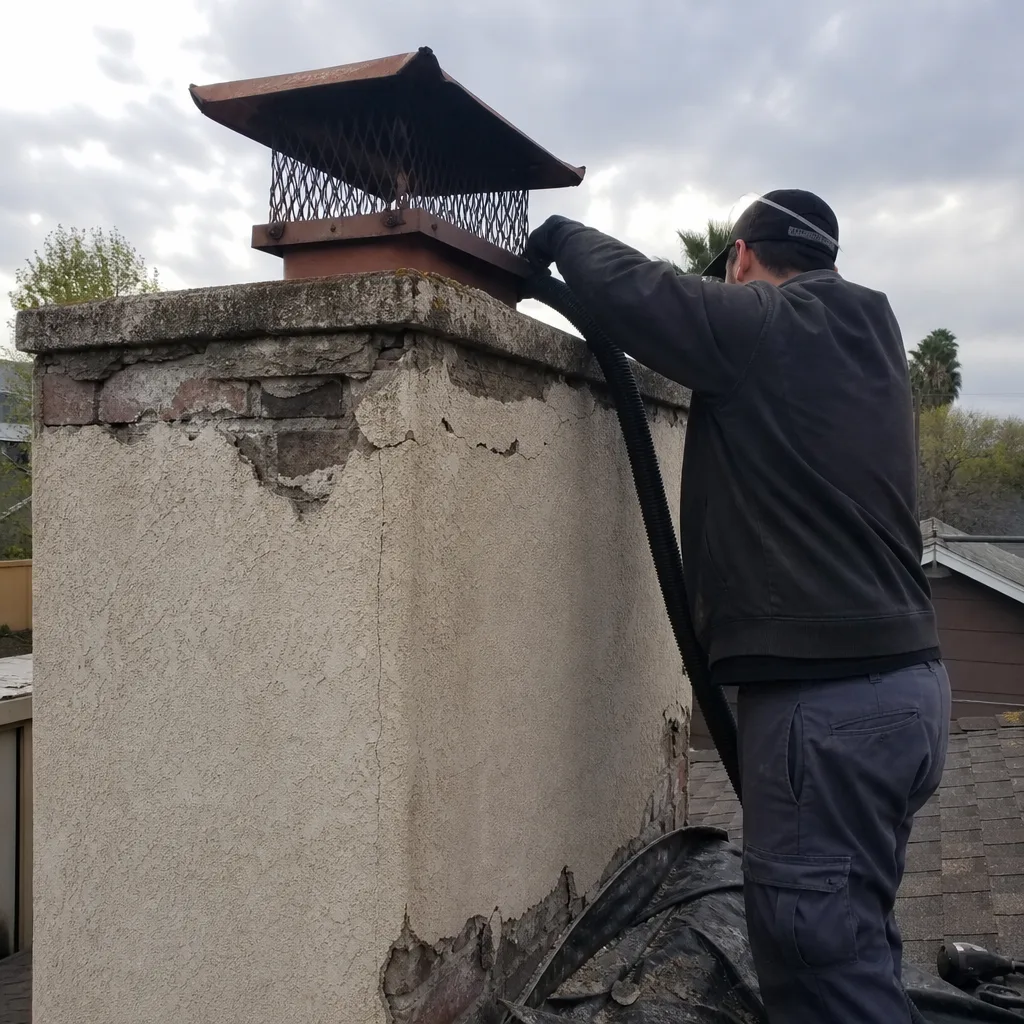 Before
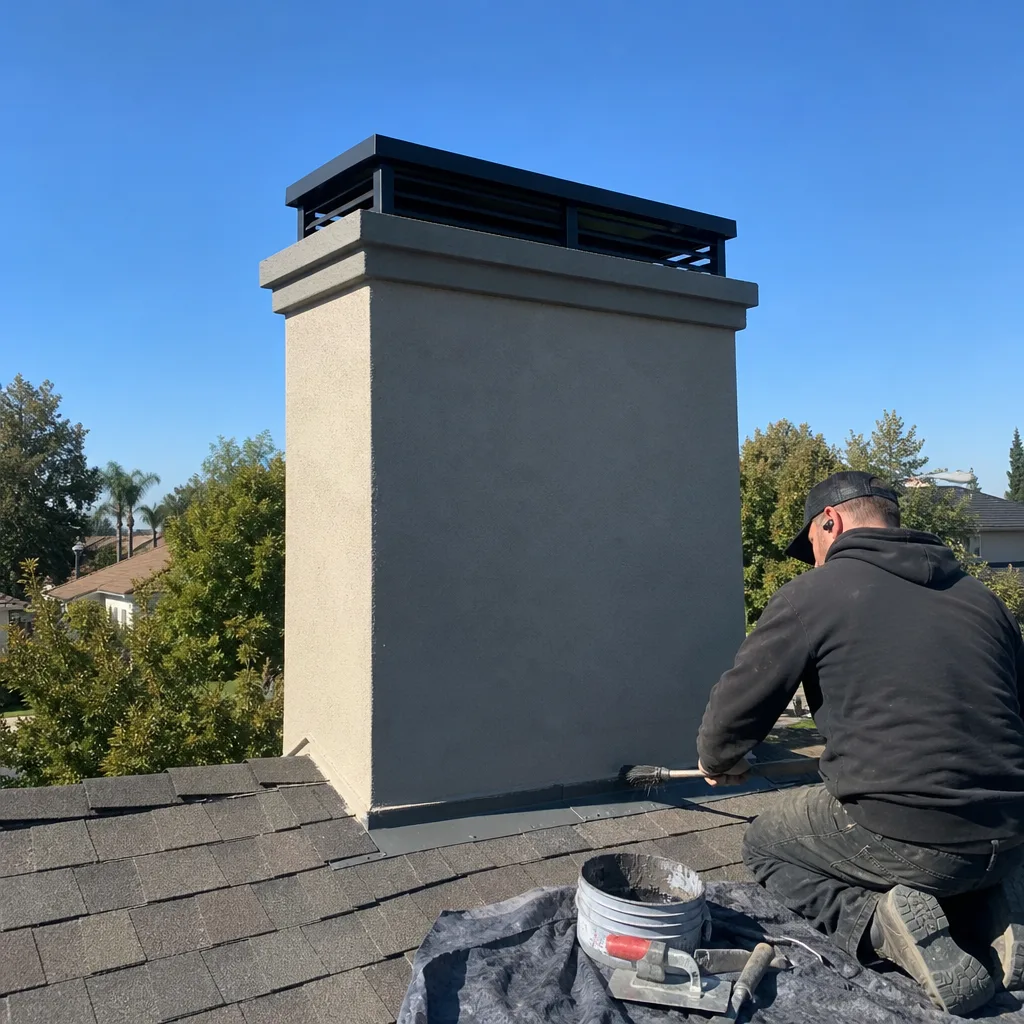 After
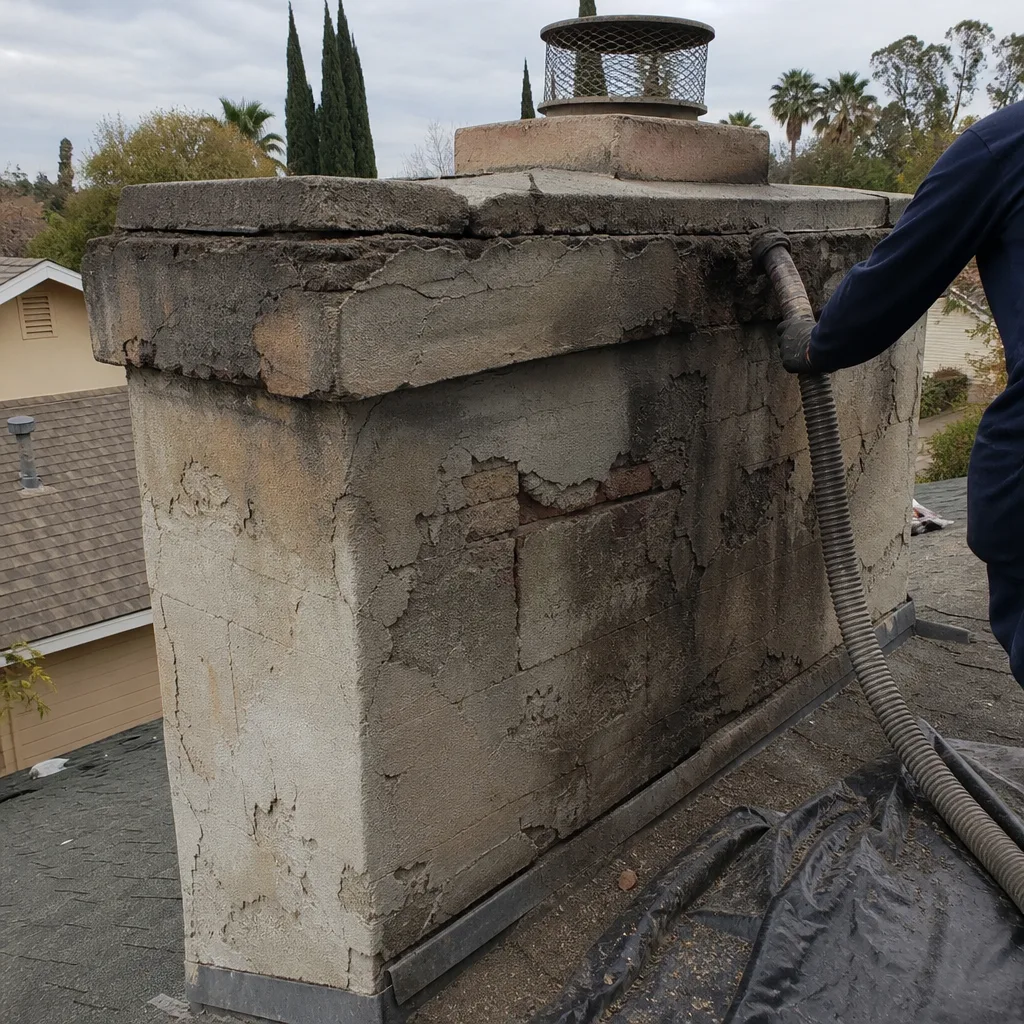 Before
 After
 Before
 After
When to Call a Professional
Call a chimney contractor any time you’ve had an active chimney fire, even if it appeared to burn itself out. The flue materials have been stressed, and you need to know what survived. Call when you’ve had a backdrafting event that you can’t fully explain with weather conditions alone. Call when you hear animals in the chimney and you’ve got them removed. Call when your CO detector goes off and you can’t find the source. Call when it’s been more than a year since your last inspection. In every one of these cases, the cost of the call is far less than the cost of the emergency you’re preventing. Chimney Repair Elk Grove offers free estimates in Elk Grove. We document everything with camera footage, and we never recommend a repair you can’t see for yourself. Call (833) 620-0280 to schedule.
Frequently Asked Questions
The National Fire Protection Association recommends an annual inspection and sweeping as needed, which for most wood-burning Elk Grove households means once per year before or during burn season. Gas fireplaces need less frequent sweeping but still benefit from an annual inspection to check venting and CO risk. Homes that burn frequently, burn unseasoned wood, or have older masonry chimneys may need twice-yearly attention. Call (833) 620-0280 and we’ll assess your specific situation.
A chimney fire sounds like a low roar, a rumble, or a freight train passing overhead. Some people describe it like heavy rain inside the chimney. The sound comes from the rush of air being pulled into the fire, which can reach temperatures above 2,000 degrees inside the flue. If you hear this sound while burning, close the damper, secure the fireplace doors, evacuate, and call 911.
Not necessarily a full replacement. Hairline cracks in clay tile liners can sometimes be addressed with a HeatShield resurfacing, which is a ceramic coating that seals cracks and restores a smooth flue surface. More severe deterioration, especially rust in metal liners or missing tile sections, usually calls for a DuraFlex liner replacement. The right answer depends on what the camera inspection shows. That’s why we document everything before recommending anything.
Creosote builds up, and creosote is fuel. A chimney that hasn’t been swept in three years has a significantly higher risk of chimney fire. At the same time, animals may have moved in, rain may have damaged the cap and crown, and liner deterioration may have progressed unnoticed. The result is a system that can fail catastrophically on the first cold night it’s pushed hard. Most chimney emergencies we respond to in Elk Grove are in chimneys that haven’t been touched in two or more years.
You can do a basic visual check from the hearth: shine a flashlight up the flue with the damper open and look for obvious obstructions, animal nesting, or heavy creosote. What you can’t see is the upper third of the flue, the condition of the liner above the smoke shelf, or the cap. Camera inspections exist for exactly this reason, and that’s standard practice for us on every sweep. For anything beyond a basic visual check, a professional inspection is the only way to know what’s actually in there.
Animal blockages during the spring nesting season and backdrafting during Tule fog inversions in December and January. Elk Grove’s mature trees and older housing stock mean a lot of uncapped chimneys, and the valley’s fog creates pressure conditions that reveal draft problems. Both are preventable, and both are cases where a homeowner who knows what they’re looking at can prevent an emergency from becoming a disaster.
The Bottom Line
Chimney emergencies in Elk Grove follow predictable patterns. They happen on cold, foggy nights when everyone’s burning. They happen in chimneys that haven’t been inspected in years. They happen because animals found an open flue, or because creosote finally reached the point where one hot fire set it off. The difference between a chimney fire that damages a liner and one that damages a house often comes down to the first 90 seconds and the preparation done months earlier. Have working CO detectors in the right places. Save your chimney contractor’s number in your phone before burn season. Know how to shut down a suspicious fire. And if you haven’t had your chimney looked at this year, do it before the fog settles in, or browse our more guides & resources to stay prepared. Call Chimney Repair Elk Grove at (833) 620-0280 for a free estimate and a camera-documented inspection. We’ll show you exactly what’s inside your flue, and if there’s a problem, we’ll fix it with contractor-grade materials that are built to pass inspection and stay that way.
Written by the team at Chimney Repair Elk Grove, serving Elk Grove since 2012.